Tequenos are a familiar Venezuelan party food, often known elsewhere as Venezuelan cheese sticks. Made with dough wrapped around cheese and fried until crisp outside and soft inside, they are closely linked to Los Teques in Miranda, where their name and early history are often traced. In Venezuela, tequenos are a popular pasapalo served at gatherings and celebrations, and in 2023, the Venezuelan Ministry of Culture registered the tequeño as a Venezuelan cultural heritage item.
Choosing a dip for tequenos can be tricky when the wrong sauce makes them feel too rich or hides the cheese. This guide gives you five balanced options.
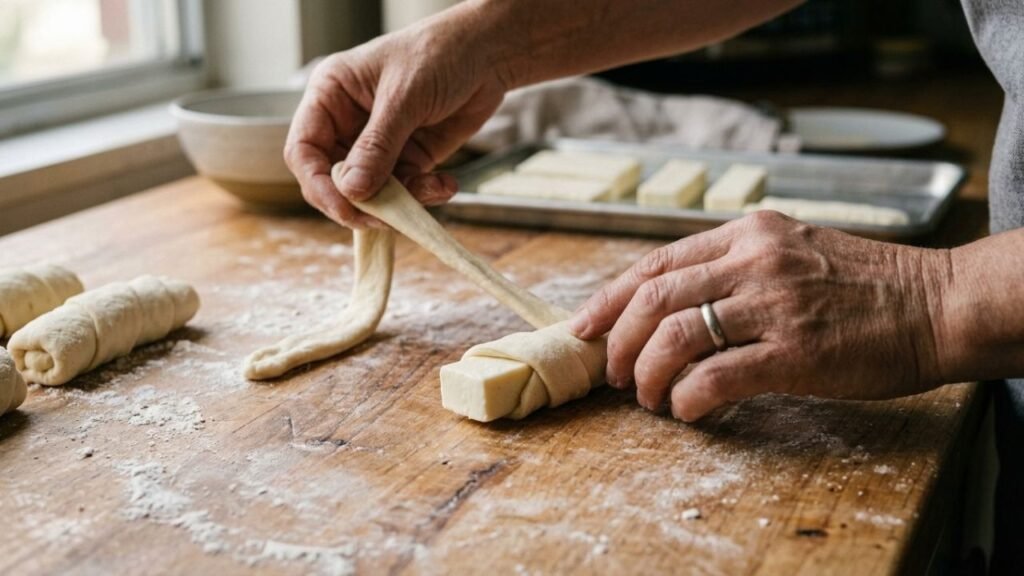
Timing at a glance
| Prep Time | Cook Time | Total Time | Yield |
| 10–15 minutes | 5–10 minutes | 15–25 minutes | About 1–1½ cups |
These times are only a guide. Your actual prep or cooking time will depend on how quickly you chop, blend, adjust and taste, so there is no need to match the clock exactly.
What goes into the five dips
Classic Guasacaca
- 1 ripe avocado
- ½ green bell pepper
- ¼ small onion
- 1 garlic clove
- ¼ cup cilantro
- ¼ cup parsley
- 2 tablespoons vinegar
- 2 tablespoons neutral oil
- 1 tablespoon water
- ½ teaspoon salt
Creamy Garlic Sauce
- ½ cup mayonnaise
- ¼ cup Greek yogurt or sour cream
- 1 garlic clove
- 1 tablespoon lemon juice
- Salt to taste
- Black pepper, optional
Salsa Rosada
- ½ cup mayonnaise
- 2 tablespoons ketchup
- 1 teaspoon lemon juice
- ½ teaspoon hot sauce
- Small pinch of salt
Spicy Red Pepper Sauce
- ½ red bell pepper
- 1 small jalapeño
- 1 garlic clove
- 1 tablespoon vinegar
- 1 tablespoon olive oil
- ¼ teaspoon cumin
- Salt to taste
Papelón-Style Sweet Dip
- ¼ cup grated papelón or dark brown sugar
- ¼ cup water
- 1 teaspoon lime juice
- Small pinch of salt
A few ingredients are easy to swap
You don’t need a specialist pantry for these sauces. What matters most is keeping the role of the ingredient intact.
| If you don’t have | Try instead | What changes |
| Papelón | Dark brown sugar | Less distinctive cane-sugar flavor |
| Fresh cilantro | Flat-leaf parsley | Milder herbal character |
| White vinegar | Apple cider vinegar | Softer, fruitier acidity |
| Greek yogurt | Sour cream | Richer texture |
| Jalapeño | Serrano or mild green chili | Heat level changes |
| Lime | Lemon | Similar acidity, different citrus note |
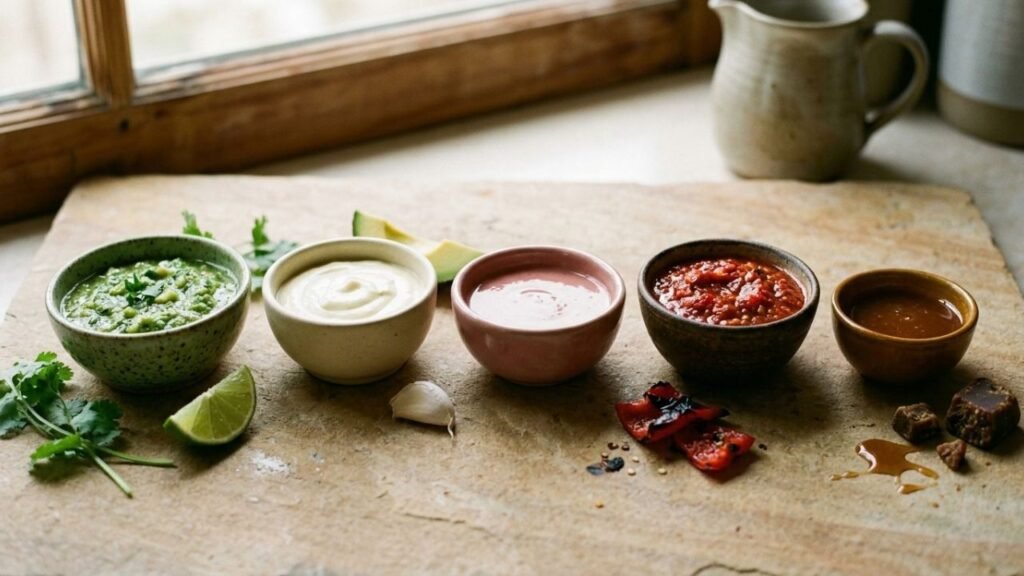
The five dips, and what each one adds
1. Guasacaca keeps the bite fresh
Guasacaca is the natural starting point. It is closely associated with Venezuelan food and is commonly served with tequenos. Although often compared with guacamole, many versions are looser and more acidic, with ingredients such as vinegar, herbs, peppers and onion.
Add everything to a blender or food processor and blend until mostly smooth. Stop before turning it into a completely dense avocado paste.
The important part is the acidity. Fried dough and melted cheese already bring fat and salt, so the vinegar gives the sauce enough lift to make the next bite feel fresh rather than heavy.
2. Creamy garlic goes in the opposite direction
This is the richer choice. Mayonnaise provides body, while yogurt or sour cream adds a little tang. Garlic gives it the sharpness that keeps the sauce from tasting flat.
Mix everything until smooth and let it rest briefly before serving. Start with one garlic clove rather than adding several immediately. Raw garlic becomes stronger as it sits, and an overly aggressive garlic sauce can easily overpower mild cheese.
This dip works particularly well when the tequenos are very crisp because the cool, smooth texture creates an immediate contrast.
3. Salsa rosada brings sweetness
Salsa rosada is a simple mayonnaise-and-ketchup sauce that is familiar across many snack tables. With tequenos, its appeal comes from the combination of creamy texture, mild sweetness and acidity.
Stir the mayonnaise and ketchup together, then add lemon juice, hot sauce and salt.
The balance matters more than the exact ratio. Too much ketchup makes the dip noticeably sweet and can hide the cheese. A small amount of hot sauce gives it some edge without turning it into a spicy dip.
4. Red pepper sauce adds heat without losing the cheese
A pepper-based sauce gives the tequeño a warmer, more savory direction. Red bell pepper brings sweetness and body, while jalapeño supplies the heat.
Blend the peppers, garlic, vinegar, olive oil, cumin and salt until smooth.
Don’t treat the chili as the main attraction. The best version still lets you taste the roasted pepper, garlic and acidity. If all you notice is heat, the sauce has gone too far.
5. Papelón takes the sweet-salty route
Papelón, an unrefined cane sugar used in Venezuelan cooking, creates a completely different pairing. Instead of cutting through the richness, a lightly sweet sauce makes the saltiness of the cheese stand out.
Warm the papelón or brown sugar with water until dissolved. Stir in lime juice and a little salt, then allow it to cool.
Keep it relatively loose. A thick syrup can make the tequeño feel like a dessert, while a lighter sauce gives you the sweet-salty contrast without covering the pastry.
keep the balance in mind
The method for all five sauces is straightforward, but tasting as you go matters more than following the quantities blindly. Blend the guasacaca and pepper sauce until they reach a dip-friendly consistency. Stir the creamy sauces until smooth. Warm the papelón mixture only until the sugar dissolves, then adjust the acidity once it has cooled slightly.
If a sauce tastes too rich, increase the acidity. If it tastes too sharp, add a little more body or sweetness. The tequeño itself should remain noticeable after every dip.
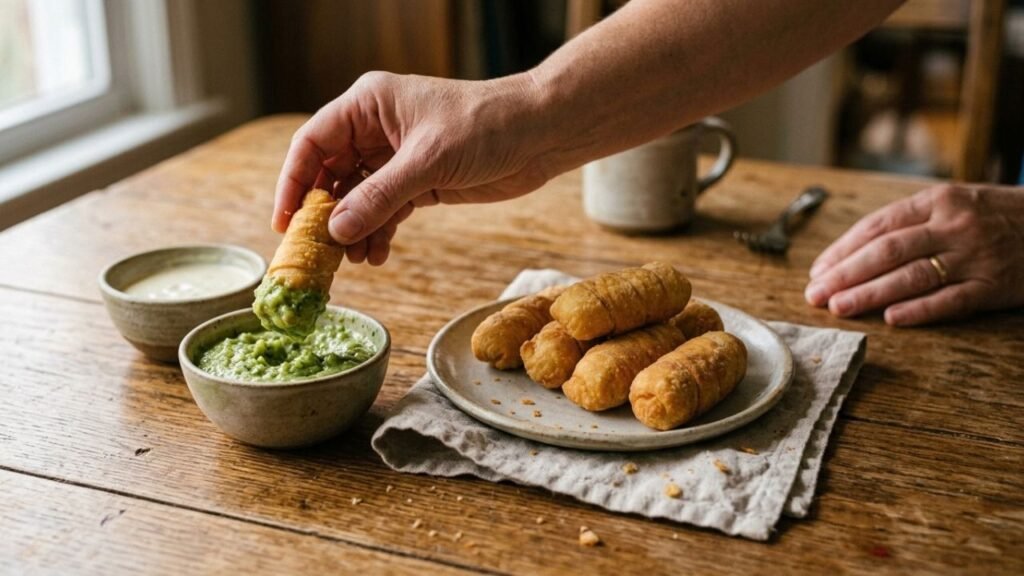
Serving the sauces without crowding the plate
If you are serving one dip, guasacaca is an easy place to start because its freshness works naturally with fried cheese.
For a larger gathering, two contrasting sauces are usually enough. Guasacaca with creamy garlic gives you freshness against richness. Spicy pepper with papelón creates a completely different sweet-and-hot combination.
Use shallow bowls so the tequenos are easy to dip without dragging half the sauce back out.
Storage and reheating
Most of these sauces can be prepared ahead and kept refrigerated in airtight containers. Guasacaca is the one to watch because avocado can darken with time, so it is better when relatively fresh.
The exact storage time depends on the freshness of the ingredients, refrigeration and how the sauce has been handled, so treat any suggested storage period as a guide rather than a guarantee.
Cooked tequenos can also be refrigerated and reheated. Dry heat in an oven or air fryer generally does a better job of bringing back some crispness than a microwave. Your reheating time will depend on how many you are warming and how crisp you want them.
Common mistakes that can throw off the balance
Making guasacaca too thick. A dense avocado paste loses the fresh quality that makes the sauce useful with fried dough.
Adding too much garlic. Garlic becomes stronger as it rests, so begin with less and adjust later.
Overloading the salsa rosada with ketchup. The sauce should be creamy and slightly sweet, not taste like ketchup mixed with mayonnaise.
Making the pepper sauce too hot. Heat should support the peppers and cheese, not erase their flavor.
Turning papelón into a syrup. A dipping sauce needs enough fluidity to coat lightly rather than overwhelm the pastry.
Serving only rich dips. Two creamy sauces beside fried cheese can quickly become heavy. A fresh or acidic option gives the plate more range.
FAQs
1. Is guasacaca the traditional tequeño dip?
It is one of the best-known pairings, but it is not the only one. Tequenos are also served with creamy, spicy and sweet sauces.
2. Is guasacaca the same as guacamole?
No. They can share avocado, but guasacaca is generally more acidic and may contain herbs, peppers, onion, garlic and vinegar.
3. Can these dips be made ahead?
Yes. Most can be prepared ahead and refrigerated. Fresh guasacaca is better when made relatively close to serving.
4. Which dip works with spicy tequenos?
Creamy garlic provides a cooling contrast, while guasacaca gives freshness without adding another heavy element.
5. Can I serve several dips together?
Yes, but contrast is more useful than quantity. Two sauces with different textures or flavor profiles can make a platter more interesting than five similar ones.
The dip should change the bite, not hide it
A tequeño already has plenty going on, from crisp pastry and salty cheese to warmth and richness. That is why the best dip is not necessarily the most elaborate one. Guasacaca brings freshness, garlic sauce adds richness, salsa rosada adds sweetness, pepper sauce brings heat and papelón creates a sweet-salty contrast.
Choosing a dip is less about finding one “best” option and more about deciding what you want from the next bite. Sometimes that means freshness, sometimes heat, and sometimes simply a little sweetness against the salty cheese.