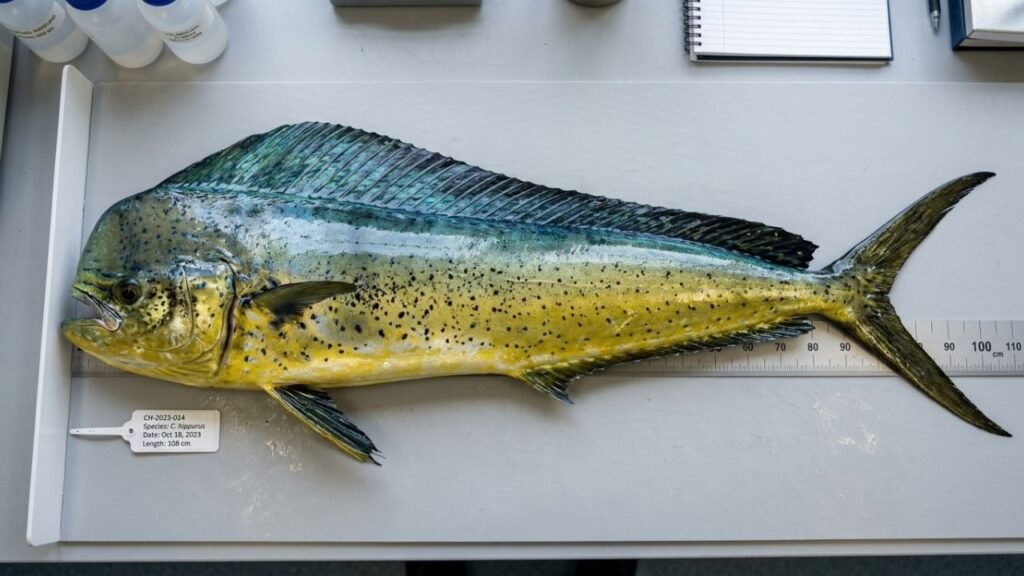
Dorado is one of those fish whose name can cause more confusion than its cooking. In different places, you may see it called mahi-mahi or dolphinfish, although it has nothing to do with the mammal its English nickname suggests. The fish itself, Coryphaena hippurus, is known for its firm white flesh, mild flavor, and slightly sweet taste, which has made it a familiar choice in coastal cooking and seafood markets around the world. Fresh dorado also has a distinctive appearance, with bright yellow and green-blue coloring on the whole fish that becomes much more subdued once it reaches the plate.
Dorado can dry out quickly when overcooked, while too much seasoning can hide its mild flavor. Finding the right balance is easier with this simple recipe.
A quick look at the timing
| Step | Approx. time |
| Preparation | 5–10 minutes |
| Cooking | 8–10 minutes |
| Total | 15–20 minutes |
These are only working times, not a promise of exactly how long your dinner will take. The size and thickness of your fish, the heat of your pan, and even how quickly you work in the kitchen can change the timing, so use these figures as a guide and take the time that works for your particular fish.
What you need for two portions
- 2 dorado fish fillets, about 150–200 g each
- 1 tablespoon olive oil
- 1 tablespoon butter
- 2 garlic cloves, finely chopped
- 1 lemon
- 1 teaspoon paprika
- ½ teaspoon black pepper
- Salt, to taste
- 1 tablespoon fresh parsley or coriander, chopped
- A small pinch of chili flakes, optional
A few useful swaps
Some of the ingredients above are common pantry items, but you may not always have every one available. If that happens, these replacements keep the basic character of the dish without requiring a special trip to the shop.
| Original ingredient | Possible replacement | What changes |
| Olive oil | Avocado oil or another neutral cooking oil | Less olive-oil flavor |
| Butter | Ghee | Slightly richer, nuttier finish |
| Parsley | Coriander/cilantro | Fresher, more pronounced herbal flavor |
| Paprika | Mild chili powder | A little more heat |
| Lemon | Lime | Sharper, slightly more tropical acidity |
| Fresh garlic | ½ teaspoon garlic powder | Less fresh aroma, but still useful |
Directions
The main idea here is straightforward. Get enough heat to brown the outside of the fish, then finish it before the lean flesh has a chance to dry out. The exact cooking time will depend on the thickness of your fillets.
1. Start with a dry fillet
Pat the dorado dry on both sides with paper towels. This is an easy step to skip, but it makes a noticeable difference when you’re trying to brown fish in a pan.
Season both sides with salt, black pepper, and paprika.
2. Let the pan do the work
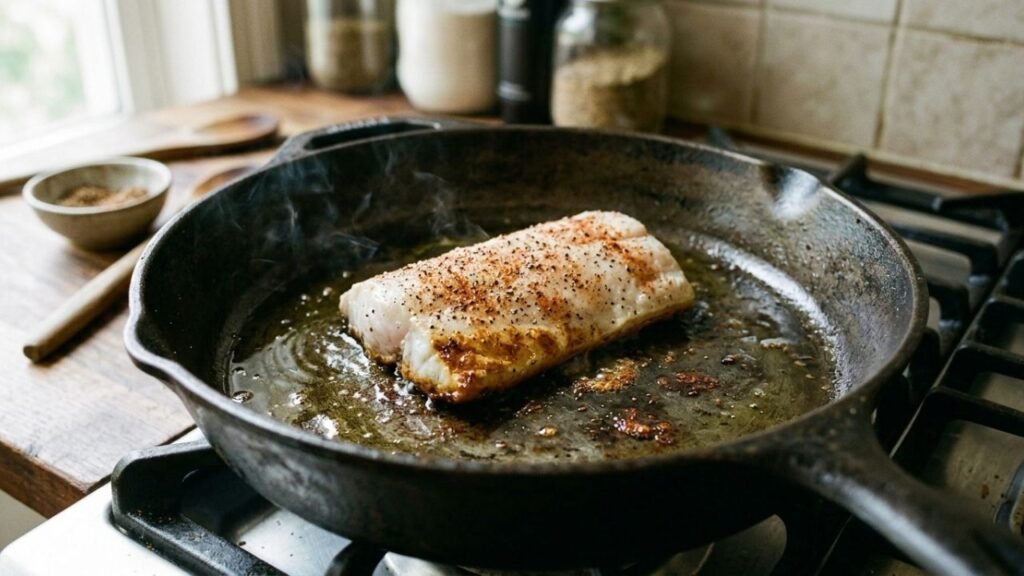
Place a heavy skillet over medium-high heat and add the olive oil. Once the oil is hot, lay the fillets into the pan.
Leave them undisturbed for around 3–4 minutes. Moving the fish repeatedly makes it harder to develop a good browned surface and increases the chance of breaking the fillet.
3. Turn and finish
When the underside has developed a golden-brown crust, turn the fish carefully.
Cook the other side for another 2–3 minutes, adjusting the heat if the outside is browning too quickly.
Add the butter and garlic toward the end. Let the butter melt and spoon it over the fish for the final minute. The garlic should become fragrant but should not be allowed to burn.
4. Add the fresh finish
Turn off the heat and squeeze fresh lemon juice over the fillets. Finish with chopped parsley or coriander and, if you like some heat, a small pinch of chili flakes.
For food safety, fish should reach an internal temperature of 145°F / 63°C. You can use a food thermometer to check the thickest part of the fillet and make sure it has reached the recommended temperature. USDA guidance on safe cooking temperatures.
Give the fish something fresh beside it
Dorado has enough character to stand on its own, so the best accompaniments don’t need to become another complicated project.
For a genuinely quick weeknight plate, steamed rice is an easy match. A cucumber and tomato salad works particularly well when you want something cool and crisp against the warm fish. Roasted potatoes make the meal more substantial, while couscous keeps preparation short.
You can also serve the fish with warm flatbread and a simple yogurt sauce. The lemon and herbs already in the fish make the combination feel complete without requiring a separate elaborate sauce.
What happens if you have leftovers?
Cooked dorado can be refrigerated and used later, although the texture is generally better when the fish is eaten fresh. If you do keep leftovers, let them cool and place them in a covered container in the refrigerator.
A practical window is around 2–3 days, but that is only a guideline. Your refrigerator temperature, how quickly the fish was cooled, how it was handled, and how fresh it was before cooking all affect how long you may personally consider it suitable to eat.
For reheating, gentle heat is preferable to aggressively frying it again. A short time in a covered pan or microwave can warm the fish without pushing it much further into dry territory. Again, the exact reheating time depends on the amount and thickness of the leftover fish.
The mistakes that quietly ruin good dorado
Putting wet fish straight into the pan
Moisture on the surface prevents proper browning. Instead of getting that lightly crisp exterior, the fish can release water and begin steaming.
Starting with a cold pan
A cold skillet gives the fish a slow start and can encourage sticking. Give the pan time to heat before the fillets go in.
Turning the fish again and again
Fish is delicate. Every unnecessary movement creates another opportunity for the fillet to break. Give the first side time to brown before turning it.
Cooking by the clock alone
Two fillets that look similar can have very different thicknesses. A thin piece may finish quickly while a thick center still needs several more minutes.
Burning the garlic
Garlic cooks much faster than the fish. Adding it too early can leave you with bitter, dark pieces before the dorado is finished. Adding it near the end keeps its flavor much cleaner.
Covering the fish with too much seasoning
Dorado has a relatively mild flavor, but that doesn’t mean it needs a long list of spices. Too many strong seasonings can make it difficult to notice the fish itself.
A Few Useful Notes Before You Begin
1. Is dorado the same as mahi-mahi?
Yes. Dorado and mahi-mahi are commonly used names for the same fish, Coryphaena hippurus. “Dolphinfish” is another common name, despite the fish having no relationship to dolphins.
2. Does dorado taste strongly of fish?
Usually, it has a mild flavor with a slightly sweet character. Its firm texture is one of the reasons it works well with relatively simple seasoning.
3. Can I grill the dorado instead?
Yes. Its firm flesh makes it suitable for grilling, although the cooking time will depend heavily on the thickness of the fillet and the heat of the grill.
4. Can I use frozen dorado?
Yes, provided it has been properly thawed and handled. Pat it dry particularly well after thawing because excess moisture can interfere with browning.
5. What should properly cooked dorado look like?
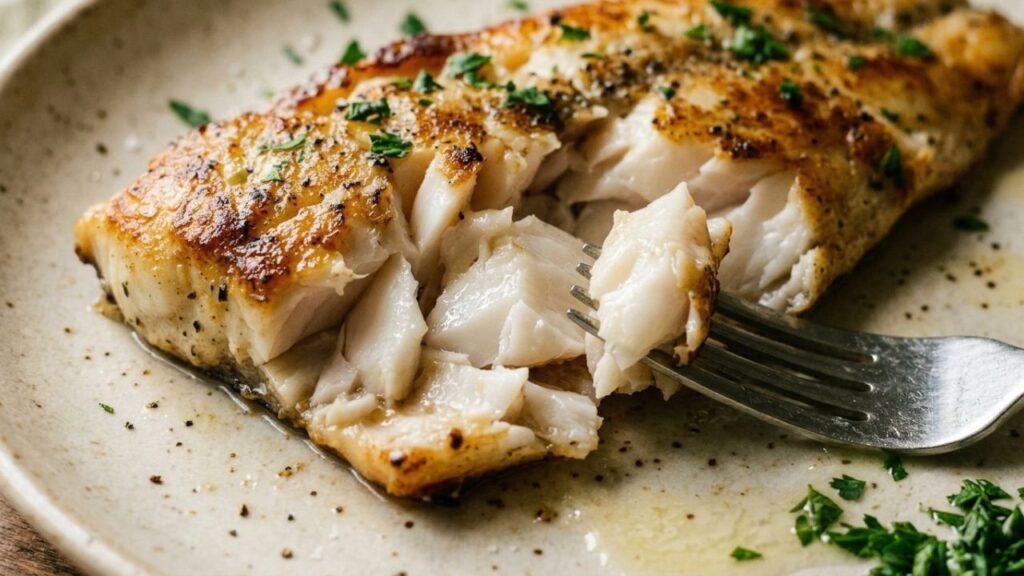
The flesh should be opaque and should separate into flakes easily. If you’re checking with a thermometer, 145°F / 63°C is a useful safety benchmark.
The simple reason this recipe works
A weeknight fish dinner doesn’t need to become a project. Dorado already gives you a firm texture and mild flavor, so the useful approach is to build around those qualities rather than overwhelm them.
The combination of a browned surface, buttery garlic, fresh lemon, and herbs gives the fish several contrasting flavors without turning the plate into something complicated. More importantly, the method leaves enough room for you to adjust the seasoning, side dishes, and timing according to the fish sitting in front of you.
That is probably the most useful thing to remember about dorado, the fish doesn’t need much added to it. It needs to be treated with enough care that what is already there doesn’t get lost.