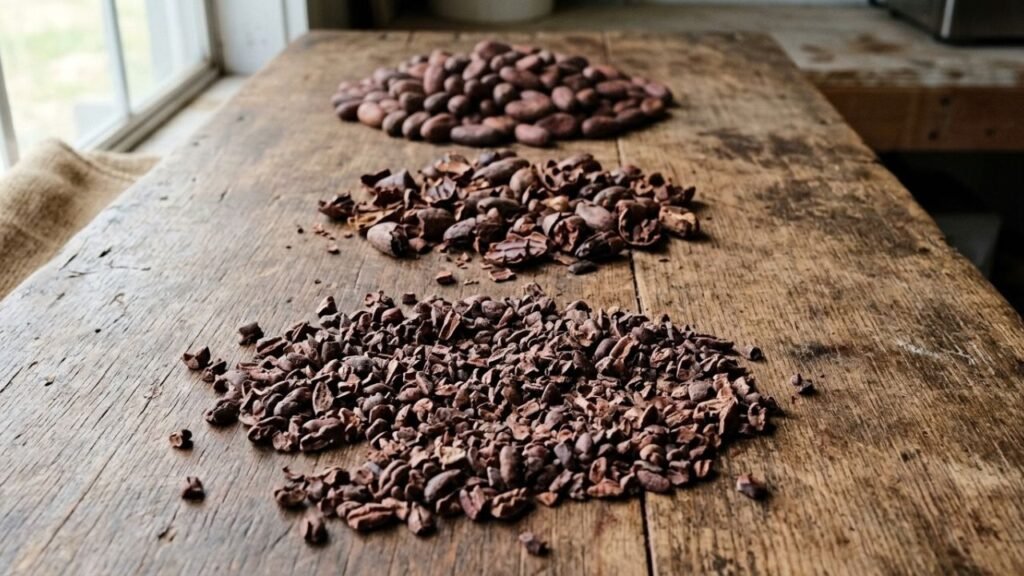
Cocoa nib is one of those chocolates terms that sound familiar until you look closer. Often called cacao nibs, they are small, roasted pieces of the cocoa bean left after the bean is cracked and its outer shell removed. Long before they became a fashionable addition to chocolate bars, nibs were a direct way to experience the cocoa bean itself—dark, roasted, slightly bitter and naturally crunchy. Today, they appear in chocolate bars and other foods, but the word “nibs” on a wrapper does not tell you much about what you are actually buying.
Choosing nib chocolate can be confusing when labels tell you little about the taste, texture or quality behind them. This guide shows you what to notice before buying.
The Crunch Tells You More Than the Label
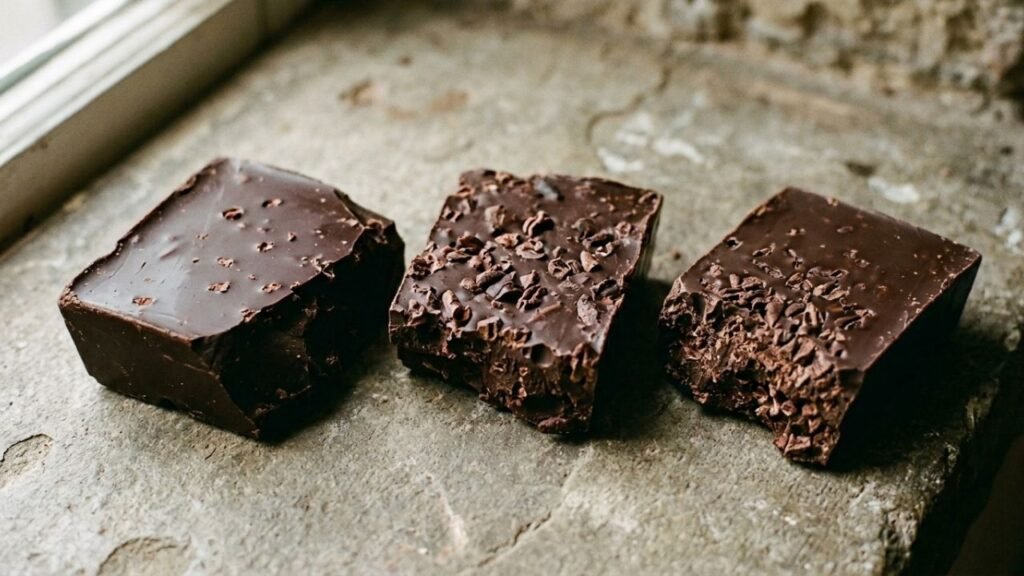
The first thing to notice about nib chocolate is the texture. Nibs should give the chocolate a distinct crunch rather than disappearing into it. If you prefer chocolate that melts completely smooth, a nib-heavy bar may feel surprisingly intense. If you enjoy roasted flavours and a little resistance when you bite, that same texture can be the most appealing part.
This is why buying nib chocolate because it sounds premium can be misleading. You are choosing a particular eating experience, not simply another version of dark chocolate.
Start With the Cocoa, Not the Fancy Words
Words like “artisan,” “premium,” “craft” and “rich” may sound reassuring, but they do not tell you much about the chocolate waiting inside. The more useful clues are usually found in the cocoa percentage, the description and how prominently the nibs feature in the bar.
A higher cocoa percentage usually means less sweetness and a stronger cocoa character. A sweeter bar, meanwhile, can soften the bitterness of the nibs.
Neither is automatically the better choice. It comes down to whether you want the nibs to take centre stage or simply add a roasted crunch.
Where the Nibs Come From Changes the Experience
Cocoa does not have one fixed flavour. Beans from different growing regions can bring their own character to the nibs, from roasted and nutty notes to fruit, spice or sharper acidity. For a closer look at why cocoa develops such different flavour profiles, see Smithsonian Magazine’s The Science of Good Chocolate.
That makes the origin printed on the package worth noticing. It gives you a useful clue about the flavour you might encounter, rather than being just another detail on the label.
Once you find a nib chocolate you enjoy, remembering its cocoa origin can make future choices easier. You start buying by flavour preference instead of packaging alone.
The Amount of Nib Matters
Not every chocolate containing nibs makes them the main attraction. Some bars use them sparingly, so you get a small burst of crunch now and then, while others include enough to make the texture noticeable in almost every bite.
Neither approach is necessarily better.
If you are buying nib chocolate for its roasted cocoa flavour and crunch, choose one where the nibs feel central to the bar rather than simply added for appearance.
Bitterness Is Not the Same as Quality
It is easy to mistake bitterness for quality when choosing darker chocolate. A stronger bitter flavour does not automatically mean a better bar; it can come from the cocoa, roasting, or the way sweetness and cocoa are balanced.
Good nib chocolate should have enough balance for the roasted character to add depth without becoming harsh.
If you are new to nib chocolate, you do not need to start with the most bitter option. A balanced bar can give you a clearer idea of whether you actually enjoy nibs.
Packaging Can Hide the Most Useful Information
The front of a chocolate wrapper is meant to catch your attention, but the back often tells you more about what you are actually buying. That is where you can find details that help you judge whether the nibs are genuinely part of the chocolate or simply part of its presentation.
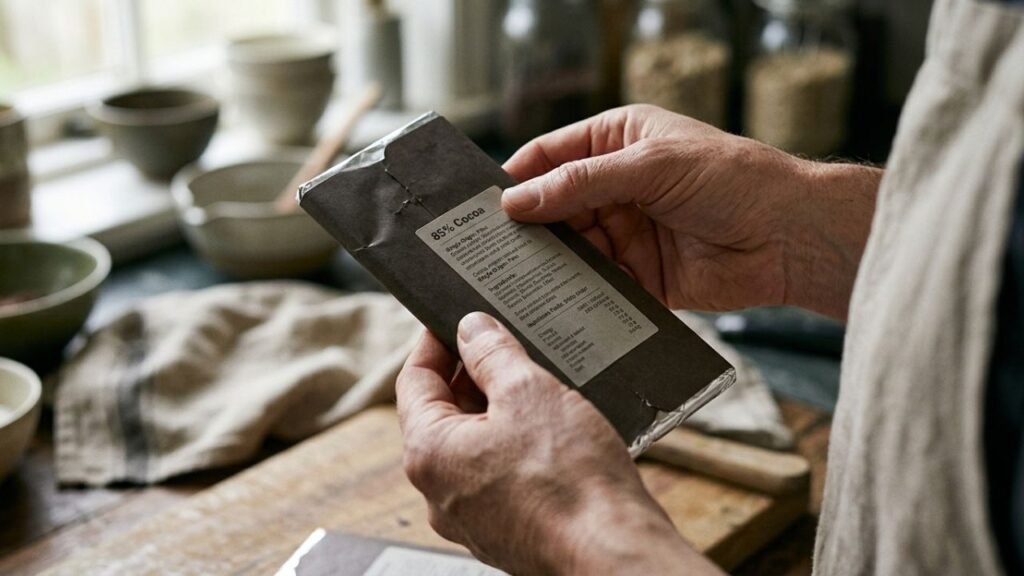
Look for the cocoa percentage, origin, nib description and other useful details. If nibs are the main feature, they should have a noticeable place in the description.
A simple label does not mean poor chocolate. It simply gives you fewer clues before buying.
Price Does Not Settle the Question
Nib chocolate can cost more than an ordinary bar, but a higher price does not automatically mean a better one. The final cost can reflect the cocoa, production, brand, packaging and, in some cases, where the cocoa comes from.
A more expensive bar may offer distinctive cocoa or careful production, but you may also be paying for presentation.
Compare it with a less expensive option. If the cheaper bar gives you the flavour and texture you want, there is little reason to pay more simply for a fancier wrapper.
A Better Way to Choose Your First Bar
If you have never tried nib chocolate before, do not let sophisticated packaging make the decision for you. Start with a bar that clearly features the nibs, suits your usual preference for sweetness or cocoa intensity, and gives you enough information to know what you are buying.
A moderately dark bar can be a good starting point because the nibs remain noticeable without making the chocolate too intense.
Once you know whether you prefer more sweetness, stronger cocoa or extra crunch, future choices become much easier.
What Usually Goes Wrong
One common mistake is assuming that “cacao nibs” automatically mean better chocolate. They do not. Nibs bring their own roasted flavour and crunch, but the quality of the finished bar still depends on the chocolate around them.
Another mistake is choosing by cocoa percentage alone. A high percentage may suit someone who enjoys intense dark chocolate but feels too sharp for someone who prefers a softer, sweeter balance.
Think of nibs as part of the chocolate’s character, not a guarantee of quality.
Five Small Details Worth Checking
- Cocoa percentage: Use it to estimate sweetness and intensity, not as a quality score.
- Cocoa origin: Useful for understanding possible flavour differences between bars.
- Nib presence: Check whether nibs are central to the bar or only a minor addition.
- Texture: Think about whether you actually enjoy crunch in otherwise smooth chocolate.
- Overall balance: The cocoa, sweetness and nibs should work together rather than allowing one element to dominate.
Frequently Asked Questions
1. Are cocoa nibs and cacao nibs the same thing?
In everyday chocolate terminology, the two names generally refer to the same basic product. Pieces of the cocoa bean after the outer shell has been removed.
2. Does nib chocolate always taste bitter?
No. The nibs have a strong roasted cocoa character, but the sweetness and cocoa level of the surrounding chocolate can make the finished bar considerably softer and sweeter.
3. Is darker nib chocolate always better?
No. Darker chocolate creates a different balance of cocoa and sweetness. The better choice depends on how you like your chocolate to taste.
4. Why does nib chocolate feel crunchy?
The crunch comes from pieces of cocoa bean incorporated into the chocolate. Unlike finely processed cocoa ingredients, the nibs remain as small pieces.
5. Should beginners avoid nib chocolate?
Not necessarily. If you enjoy dark chocolate, roasted flavours or textured foods, you may already have a good starting point. A balanced bar is usually easier to appreciate than the most intensely bitter option.
6. What makes nib chocolate different from regular chocolate?
The defining difference is texture and roasted cocoa character. Nibs remain as pieces inside the chocolate, creating a contrast that a completely smooth bar does not have.
The Better Purchase Is the One You Understand
Buying nib chocolate becomes easier once you stop treating “nibs” as a promise of superior quality. They are a particular cocoa ingredient with a particular character, roasted, concentrated, slightly bitter and crunchy. The chocolate around them determines whether those qualities feel balanced or overwhelming.
Before choosing the prettiest package or highest cocoa percentage, look closer. The most useful information is often hiding in the details the front of the wrapper does not make much noise about.