French toast, known in France as pain perdu, has long been associated with the sensible idea of giving older bread another life. Challah makes a particularly good version because its braided, enriched bread has a tender crumb, a slight sweetness, and enough structure to become something quite different when toasted. What people often call challah French toast is really a meeting of two traditions. A Jewish bread with a long cultural history and a dish that has appeared in many forms across European and American kitchens.
Getting challah French toast crisp without drying out the center can be tricky, especially when the bread is too fresh or the heat is off. This guide shows you how to get the balance right.
1. Let the Challah Lose Some Freshness
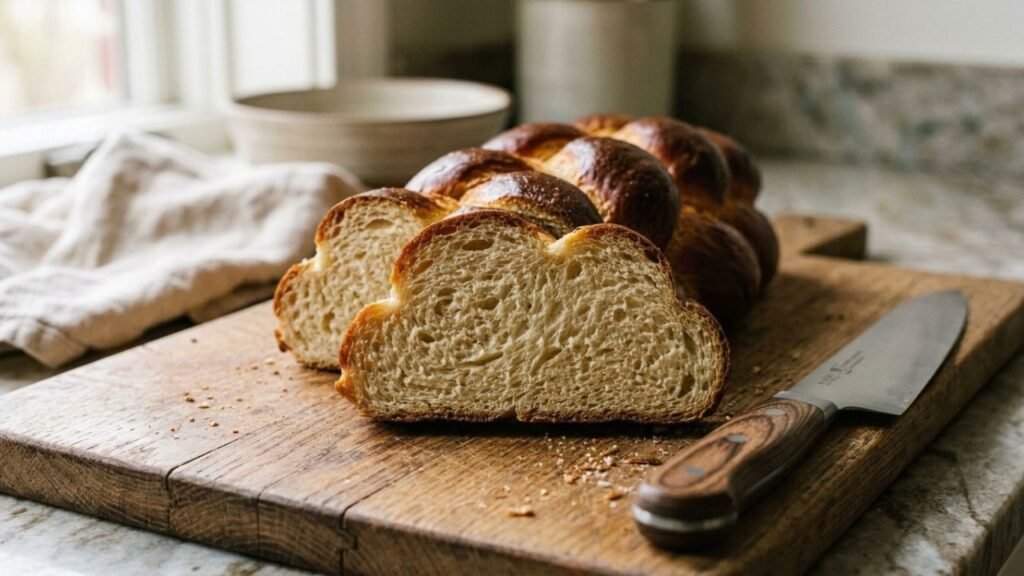
Fresh challah has a soft, tender crumb and plenty of moisture, which makes it lovely to eat but slightly tricky for French toast. That extra moisture can make the bread fragile before the outside has a chance to turn crisp.
A day-old loaf is often better suited to the job. Its crumb has firmed up enough to absorb custard without falling apart.
You do not want the bread hard or completely stale. Just let it lose some surface moisture. If the challah is very fresh, leaving sliced pieces uncovered for a few hours can make a noticeable difference.
2. Give Thick Slices the Advantage
The thickness of the challah has a lot to do with the final texture. Thin slices can soften all the way through before the surface has enough time to develop a proper crust, while thicker slices give the heat more time to work its way inward.
Aim for slices around ¾ to 1 inch thick. They are substantial enough to hold their shape and stay soft in the center without becoming overly heavy.
The best part is the contrast: a browned, lightly crisp surface giving way to a tender, custardy crumb underneath. That change in texture is what makes a thick slice worth choosing.
3. Keep the Custard Balanced
It is easy to assume that a richer custard will make better French toast, but adding more dairy can actually work against the texture. The egg gives the mixture enough structure to set, while milk or cream brings moisture and richness. Too much liquid can leave the center heavy, especially when the challah is already soft.
A little salt helps keep the sweetness balanced, while vanilla or a touch of spice can add warmth without masking the flavor of the bread.
The custard should support the challah, not overpower it. You should still taste the toasted, slightly sweet character of the bread beneath the richness.
4. Soak Enough to Reach the Center
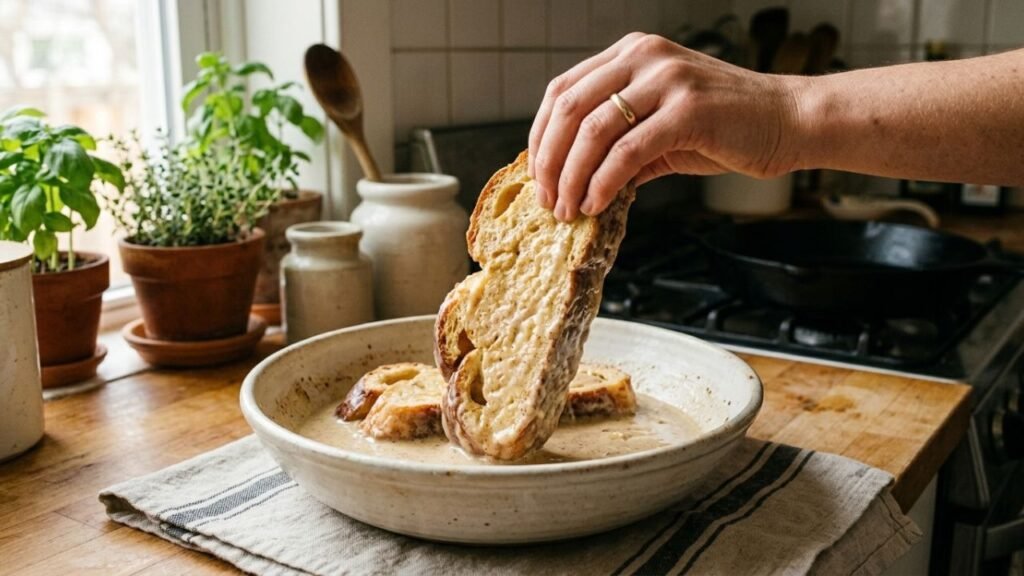
Getting the soak right is one of the finer details of good challah French toast. A quick dip may wet the surface without reaching the center, while too much time in the custard can leave the crumb weak and overly wet.
How long it takes depends on the bread. Thick, slightly dry slices can absorb more than fresh, delicate ones.
Rather than watching the clock, pay attention to the texture. The challah should feel softer and heavier, but it should still hold its shape when you lift it from the custard. That is a better guide than any fixed soaking time.
5. Build the Crust Before You Worry About Color
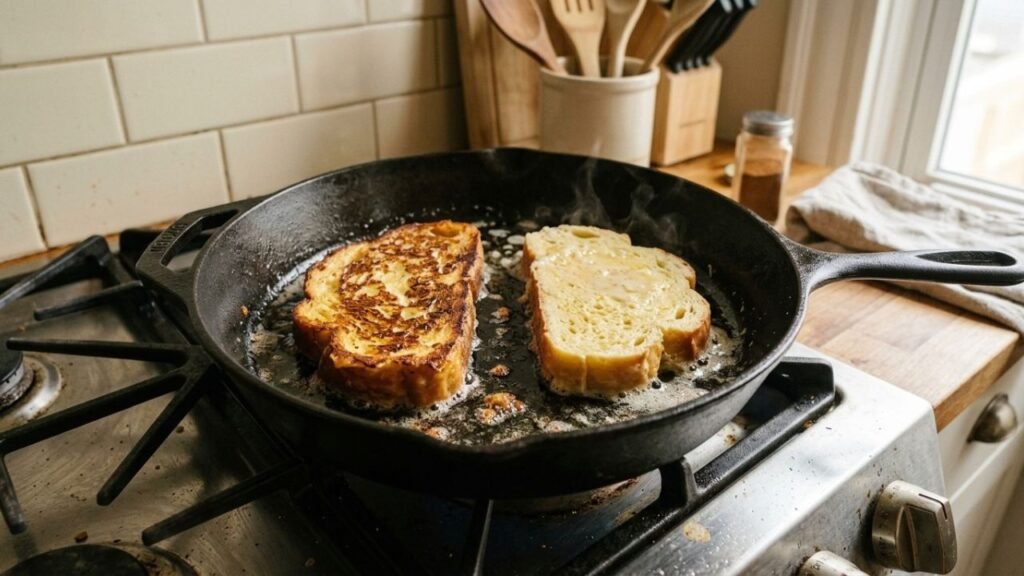
A crisp crust starts with a pan that is properly heated. If the surface is too cool, the challah can absorb the butter or oil without developing the firm, browned exterior that gives French toast its texture.
The answer is not to turn the heat all the way up. Challah already contains enough natural sweetness to brown fairly quickly, so aggressive heat can darken the outside while the center is still soft and undercooked.
Aim for steady, moderate heat. You want the surface to turn a rich golden brown gradually, giving the inside enough time to warm and set without pushing the crust too far.
6. Butter Alone Is Not Always the Answer
Butter gives French toast much of its familiar flavor, but it can burn before a thick slice has finished cooking. That is where a little neutral oil can help. It gives the bread enough time to brown without letting the butter’s milk solids scorch too quickly. If you want to learn more about choosing and using cooking oils, the American Heart Association’s Healthy Cooking Oils guide offers a useful overview of different oils and cooking considerations.
You still get the richness of butter, while the oil makes the fat more forgiving over the heat. If the pan starts collecting dark, burnt bits, it is better to clear them away before cooking the next batch. Fresh butter and oil will give the following slices a cleaner flavor and a more even crust.
7. Keep the Crisp Surface Away From Steam
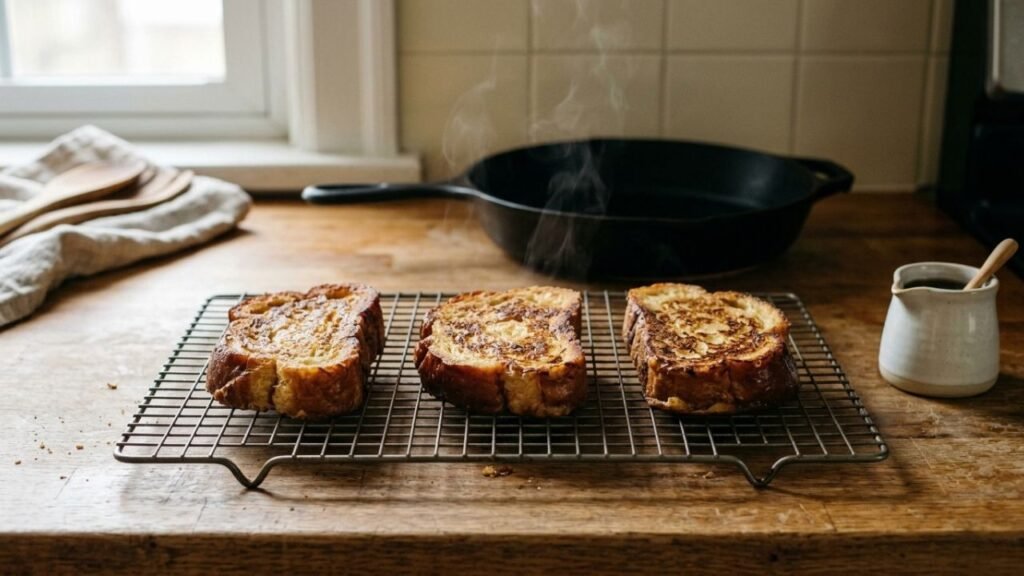
French toast can lose its crispness surprisingly quickly once it leaves the pan. Stack the hot slices together and the steam gets trapped between them, softening the browned surfaces you worked to develop.
A wire rack gives the heat and moisture somewhere to escape. If you are cooking several batches, keeping the slices warm on a rack is much better than leaving them piled on a plate.
The same idea applies to syrup. Pouring it over the toast too early can soften the crust almost instantly, so keeping it on the side lets you enjoy that crisp exterior for longer.
Small Details That Make a Noticeable Difference
A few choices are easy to overlook but can change the finished texture.
- Use a wide pan: Crowding lowers the cooking surface temperature and makes even browning harder.
- Leave space between slices: Each piece needs direct contact with the pan.
- Turn only when the first side has properly browned: Constant flipping interferes with crust development.
- Season the custard rather than the finished toast: This distributes flavor more evenly.
- Do not drown the finished slices: Syrup, fruit, cream, or sugar should complement the crisp surface rather than immediately saturate it.
None of these is complicated. The difference comes from paying attention to moisture and heat instead of treating French toast as something that can be cooked on autopilot.
Quick FAQs
1. Is fresh challah good for French toast?
Yes, but slightly stale challah usually gives you better control because its crumb can absorb the custard without becoming as fragile.
2. Why does my challah French toast become soggy?
Usually, the bread has absorbed too much liquid, the pan was not hot enough, or the cooked slices were stacked while still steaming.
3. How thick should challah be for French toast?
Slices around ¾ to 1 inch thick generally provide a good balance between a crisp exterior and soft interior.
4. Can challah be too dry?
Absolutely. Very dry bread can absorb liquid unevenly and produce a tougher center. The goal is slightly stale, not dehydrated.
5. Why does the outside brown before the inside cooks?
The cooking temperature may be too high for the thickness of the bread. A moderate, controlled heat gives the center more time to set before the surface becomes overly dark.
6. How do I keep French toast crispy after cooking?
Place cooked slices on a wire rack rather than stacking them. This allows steam to escape and helps protect the browned surface.
7. Is challah better than regular bread for French toast?
It depends on the texture you want. Challah’s enriched, tender crumb creates a richer and softer interior, while sturdier breads can produce a different, more bread-forward result.
The Point Is the Contrast
The best challah French toast is about contrast rather than making every part of the slice crisp. The outside should be deeply golden with a delicate crunch, while the center stays soft, tender, and rich from the custard. That change in texture is what makes each bite satisfying, and it is also where challah has an advantage. Its tender, enriched crumb can become almost custardy in the middle while the surface develops a beautifully browned crust.
The balance comes down to a few details, slightly drier bread, thick slices, a well-balanced custard, steady heat, and patience. Once those details make sense, the process becomes much easier to judge by texture rather than rules.