Caesar salad is one of those dishes whose name has become bigger than its original story. Usually called simply a Caesar, the salad is widely linked to restaurateur Caesar Cardini, who is associated with its creation in Tijuana, Mexico, in the 1920s. Over time, the dressing became the part people remembered most creamy, sharp, salty and deeply savory, with Parmesan, garlic and Worcestershire bringing most of its familiar character.
Getting homemade Caesar dressing to taste creamy without becoming too heavy can be tricky. This recipe shows you how to get that balance right without overcomplicating it.
Recipe at a glance
| Stages | Approximate Time |
| Prep | 10 minutes |
| Cook | 0 minutes |
| Total | 10 minutes |
| Yield | About ¾ cup |
These are estimated preparation times, so your actual time can be shorter or longer depending on how quickly you prep, measure, grate and mix everything.
What you’ll need
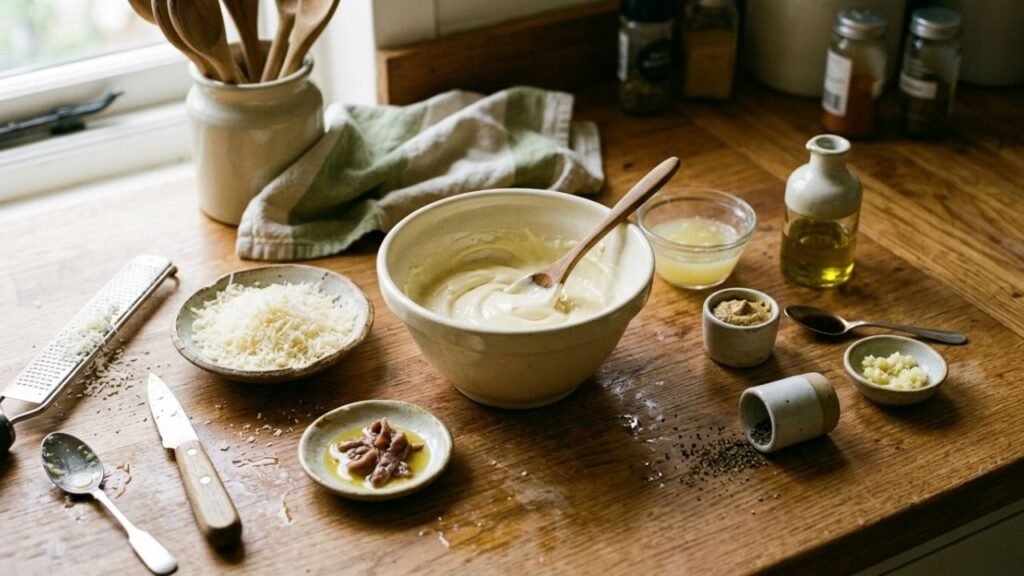
- ½ cup mayonnaise
- 2 tablespoons finely grated Parmesan cheese
- 1 tablespoon fresh lemon juice
- 1 teaspoon Dijon mustard
- 1 small garlic clove, finely grated or minced
- 2 anchovy fillets, finely minced
- 1 teaspoon Worcestershire sauce
- 2 tablespoons extra-virgin olive oil
- 1–2 tablespoons cold water
- ¼ teaspoon freshly ground black pepper, or to taste
- Salt, only if needed
A few useful swaps
Most of the ingredients have a fairly specific job, so substitutions can change the character of the finished dressing. If you don’t have one of the less familiar ingredients, these are the easiest alternatives.
| Ingredient | Possible replacement | What changes |
| Anchovy fillets | ½–1 teaspoon anchovy paste | Similar savory depth, easier to blend |
| Dijon mustard | ½ teaspoon yellow mustard | Slightly sharper and less complex |
| Worcestershire sauce | A small splash of soy sauce | More salty and less tangy |
| Fresh lemon juice | White wine vinegar | Sharper acidity with less citrus character |
| Parmesan | Pecorino Romano | Saltier and stronger, so use a little less |
| Mayonnaise | Homemade mayonnaise | Works well if you prefer making the base yourself |
If you have anchovies available, they are worth keeping. They do not need to make the dressing taste strongly of fish, used in a small amount, they mainly give the dressing a deeper savory background.
The five-minute dressing that makes the salad
The method is simple, but the order helps everything come together smoothly.
1. Build the savory base
Add the mayonnaise, Parmesan, lemon juice, Dijon mustard, garlic, minced anchovies and Worcestershire sauce to a medium bowl. Whisk until the mixture looks smooth and the anchovy and garlic are evenly distributed.
2. Bring in the olive oil
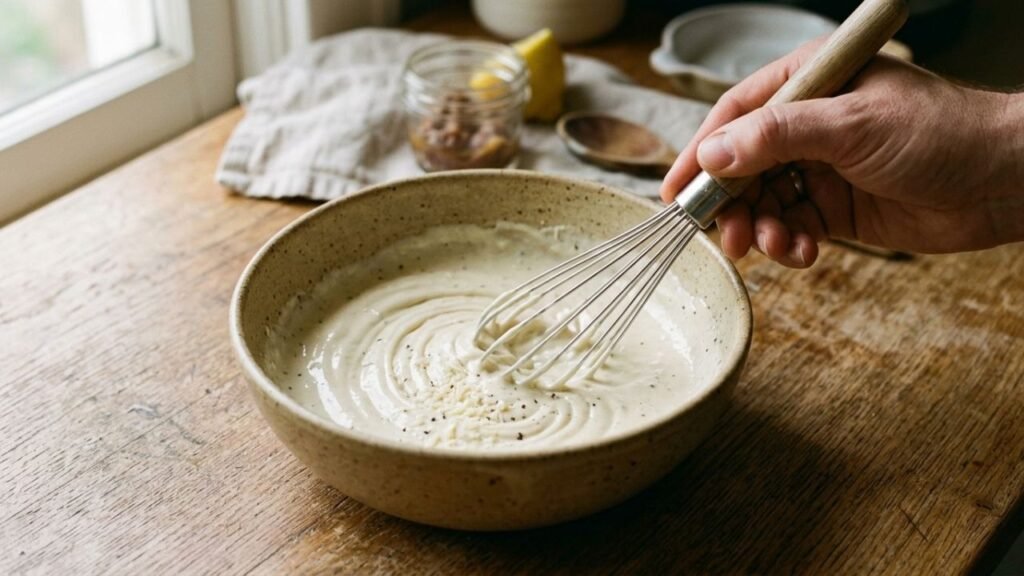
Slowly whisk in the olive oil until the dressing becomes glossy and cohesive. Because mayonnaise is already emulsified, you don’t need to treat this like a traditional oil-and-vinegar dressing. A steady whisk is enough.
3. Loosen the texture
Whisk in one tablespoon of cold water. Check the consistency before adding more. If the dressing is still very thick, add another tablespoon.
It should be creamy enough to cling to a lettuce leaf but loose enough to spread without leaving a heavy layer.
4. Finish with pepper
Add the black pepper and taste. Only add salt if it genuinely needs it. Parmesan, anchovies and Worcestershire sauce already bring plenty of saltiness.
Give the dressing a few minutes to rest before using it. The garlic and anchovy flavors become less separate as they sit, which makes the final taste more rounded.
Let the lettuce decide how much dressing you need
Caesar dressing works best with crisp romaine because the leaves have enough structure to carry a rich dressing. Before tossing, make sure the lettuce is properly dry. Water left on the leaves can dilute the dressing and prevent it from coating evenly.
Start with a modest amount of dressing and toss the salad thoroughly. Add more only if the leaves still look underdressed.
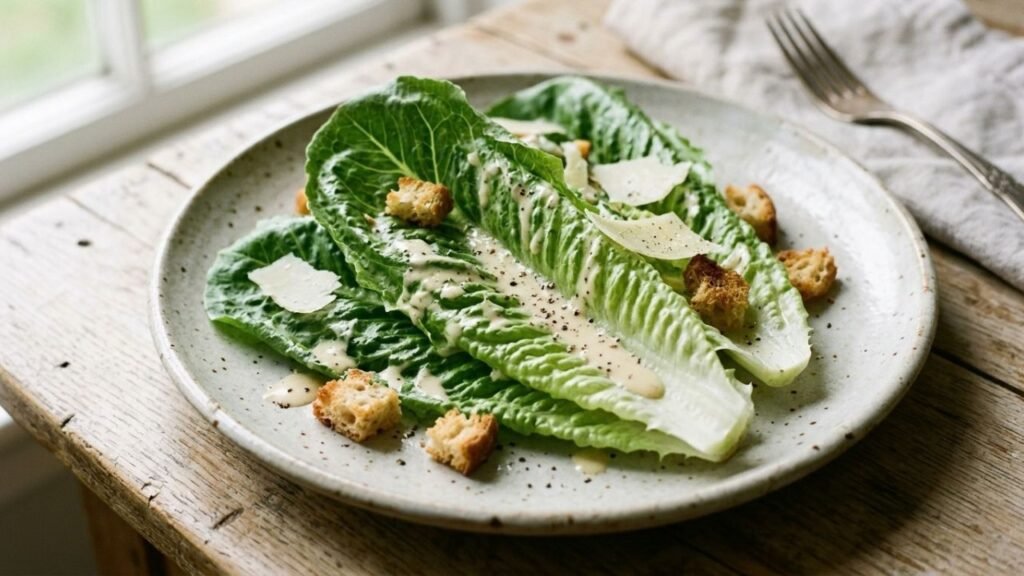
The goal isn’t to make every leaf glossy with a thick coating. You want enough dressing to reach the folds and ridges of the romaine while allowing the lettuce itself to remain crisp and noticeable.
Fresh croutons and extra Parmesan work naturally here. A little additional black pepper over the top also gives the finished salad more definition.
If you’re making it ahead
The dressing can be made ahead and kept refrigerated in a covered container. For the best texture, give it a good stir before using because it can become thicker while chilled. For broader guidance on keeping refrigerated foods safely, see the FDA’s Are You Storing Food Safely?
How long you keep it is ultimately your choice and depends on the freshness of the ingredients, how it was handled and how consistently it has been refrigerated. If its appearance, smell or texture seems questionable, it is better not to use it.
Keep the dressing separate from the lettuce until you are ready to serve. Once dressed, the romaine will gradually lose its crispness.
The small mistakes that change the whole dressing
Making it too thick
A dense dressing can seem luxurious when you’re mixing it, but it often becomes tiring once it coats the entire salad. Add cold water gradually until it moves easily.
Adding salt too early
There are several salty ingredients here. Taste first, then decide whether additional salt is actually necessary.
Using too much garlic
Raw garlic becomes more noticeable as it sits. One small clove can provide plenty of flavor without turning the dressing into a garlic sauce.
Skipping the anchovy
If you dislike anchovies, the decision is yours, but removing them changes the savory depth of the dressing. If you’re uncertain about them, use less rather than automatically leaving them out.
Pouring all the dressing onto the salad
This is probably the easiest way to make a good Caesar feel heavy. Dress gradually, toss, then decide whether more is needed.
Using wet lettuce
Even a well-balanced dressing struggles when it is immediately diluted by water clinging to the leaves. Dry romaine makes a noticeable difference.
Quick answers before you start
1. Can I make Caesar dressing without anchovies?
Yes. The dressing will still work, although it will lose some of its characteristic savory depth. You can compensate somewhat with Parmesan and Worcestershire sauce.
2. Can I use bottled lemon juice?
You can, but fresh lemon juice generally gives the dressing a cleaner, brighter acidity. Bottled juice can taste flatter depending on the brand.
3. Why is my Caesar dressing too salty?
The combination of Parmesan, anchovies and Worcestershire sauce can add up quickly. Loosen and dilute the dressing with a little more mayonnaise and water rather than adding more acidic ingredients immediately.
4. Why does my dressing taste too strong?
Let it sit for a few minutes before changing anything. Garlic, anchovy and Worcestershire can taste more distinct immediately after mixing and become more integrated with a little time.
5. Can I make it without mayonnaise?
Yes. A traditional-style Caesar can be built around egg yolk and oil instead, but that requires a different technique. Mayonnaise makes this version quicker and more forgiving for everyday cooking.
6. What lettuce works best with Caesar dressing?
Romaine is the classic choice because its crisp leaves can handle a rich dressing. Hearts of romaine are particularly convenient because they provide sturdy leaves with plenty of crunch.
7. Can I use this dressing for something other than salad?
Absolutely. Its salty, creamy and savory character works well with roasted potatoes, grilled chicken, sandwiches and other crisp vegetables.
A Caesar worth keeping in the fridge
The appeal of a good Caesar dressing is its balance. The mayonnaise provides creaminess, lemon cuts through the richness, Parmesan brings salt and depth, while garlic, anchovy and Worcestershire build the flavor underneath.
None of those ingredients needs to dominate.
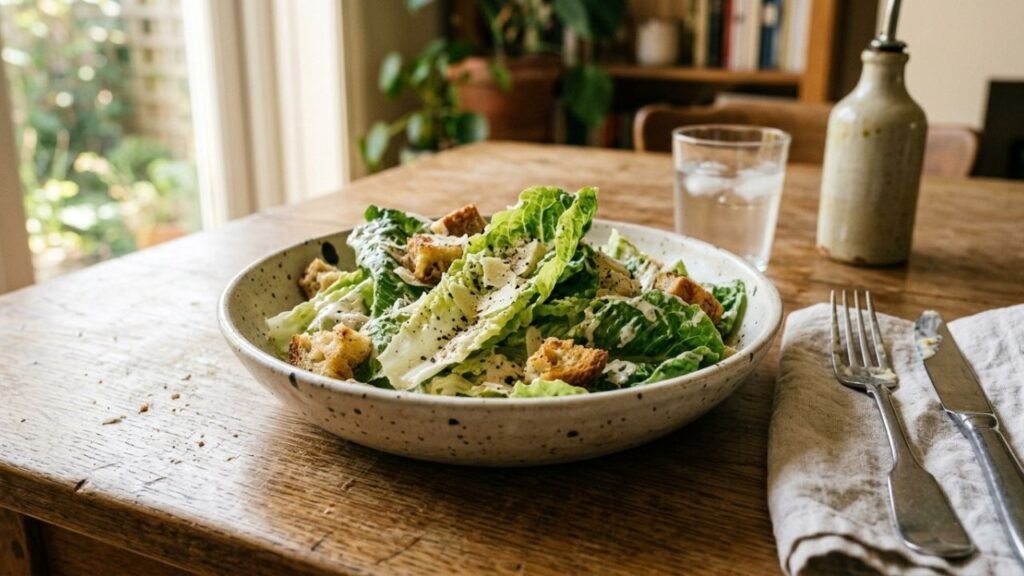
That is what makes the homemade version worth making. You can adjust the dressing until it suits the lettuce rather than forcing the lettuce to carry an overly thick or aggressively seasoned sauce. Once that balance is right, even a very simple bowl of romaine, Parmesan and croutons feels complete.