A good taco soup recipe is one of those weeknight dishes that sits somewhere between a bowl of chili and the familiar flavors of taco night. It is commonly made with ground beef, beans, tomatoes, corn, broth, and taco-style seasonings, although there is no single fixed version of the soup. Some people know it as taco chili or simply taco soup, and its appeal comes from turning familiar taco flavors into a warm, filling bowl that works well when dinner needs to be simple.
The biggest problem with taco soup is getting the flavor and texture right without making dinner feel like a project. This guide keeps things simple and balanced.
Recipe at a glance
| Stage | Time |
| Prep time | 10 minutes |
| Cook time | 25 minutes |
| Total time | 35 minutes |
| Servings | 6 |
These times are a useful estimate for planning rather than a rule. Your actual prep and cooking time can be shorter or longer depending on how quickly you chop, how your stove heats, and how you prefer the soup to cook.
What you’ll need
- 1 tablespoon olive oil
- 1 pound ground beef
- 1 medium onion, diced
- 2 cloves garlic, minced
- 2 tablespoons taco seasoning or 1 taco seasoning packet
- 1 can (14–15 ounces) diced tomatoes, with juices
- 1 can (10 ounces) diced tomatoes with green chiles
- 1 can (15 ounces) black beans, drained and rinsed
- 1 can (15 ounces) pinto beans, drained and rinsed
- 1 cup corn, frozen or canned
- 2 cups beef or chicken broth
- 1/2 teaspoon salt, or to taste
- 1/4 teaspoon black pepper, or to taste
- Juice of 1/2 lime
Easy swaps for less familiar ingredients
Most of the ingredients are everyday pantry items, but a few can be changed without making the soup complicated.
| Ingredient | Simple replacement |
| Ground beef | Ground turkey or ground chicken |
| Pinto beans | Kidney beans or extra black beans |
| Diced tomatoes with green chiles | Regular diced tomatoes plus a little chopped jalapeño |
| Fresh lime | 1–2 teaspoons bottled lime juice |
| Frozen corn | Canned corn, drained |
| Beef broth | Chicken broth or vegetable broth |
The important thing with substitutions is to remember that they can change the final flavor. For example, ground turkey is milder and leaner than beef, while extra jalapeño will make the soup noticeably hotter.
Directions
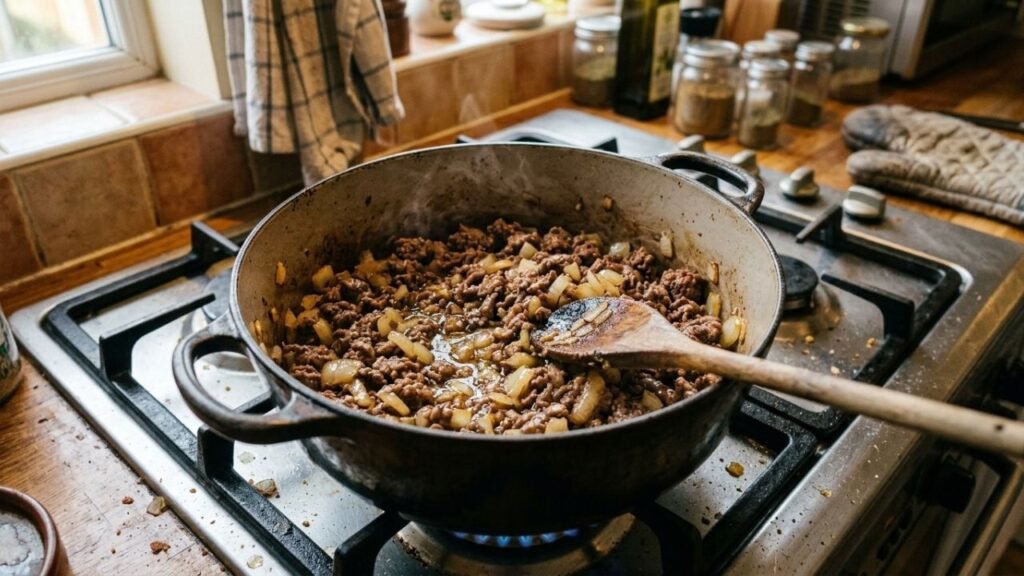
The easiest way to keep this soup flavorful is to build it in stages rather than putting everything into the pot at once. Give the beef and seasoning a little attention first, then let the tomatoes, beans, corn, and broth come together gently.
- Brown the beef and onion.
Heat the olive oil in a large pot over medium-high heat. Add the ground beef and diced onion. Cook for about 7–9 minutes, breaking the beef into small pieces as it cooks, until the meat is browned and the onion has softened. - Add the garlic and seasoning.
Stir in the minced garlic and taco seasoning. Cook for about 30–60 seconds, stirring constantly. This short step helps the seasoning coat the beef before the liquid is added. - Add the main ingredients.
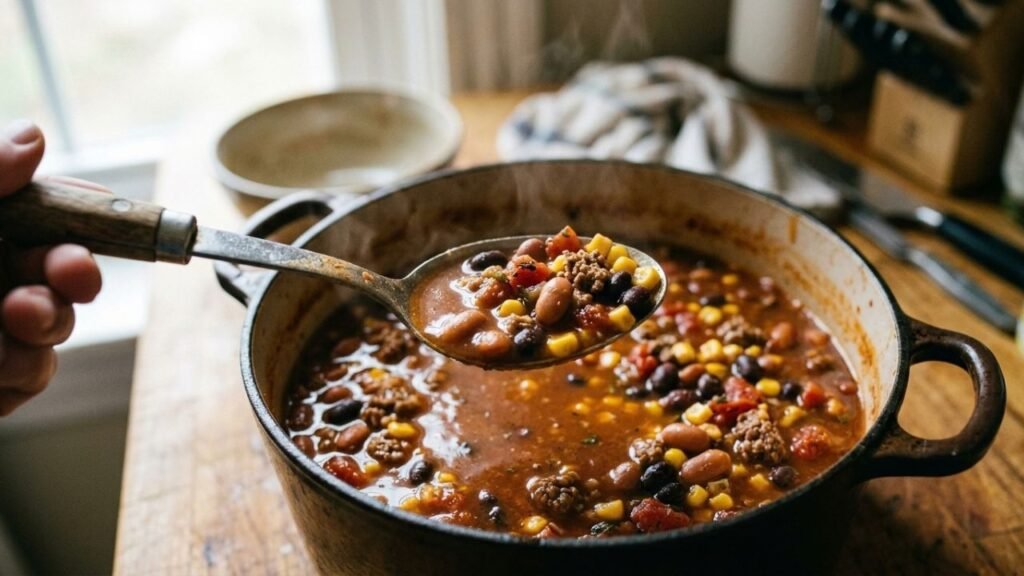
Stir in the diced tomatoes, tomatoes with green chiles, black beans, pinto beans, and corn. - Pour in the broth.
Add the broth and stir everything together. Bring the soup to a gentle boil. - Let it simmer.
Reduce the heat and simmer uncovered for about 15–20 minutes. Stir occasionally. If the soup looks thinner than you like, give it a few additional minutes uncovered so some of the liquid can cook away. - Finish and taste.
Turn off the heat and stir in the lime juice. Taste before adding more salt because taco seasoning, broth, and canned ingredients can already contain quite a bit.
The toppings change the whole bowl
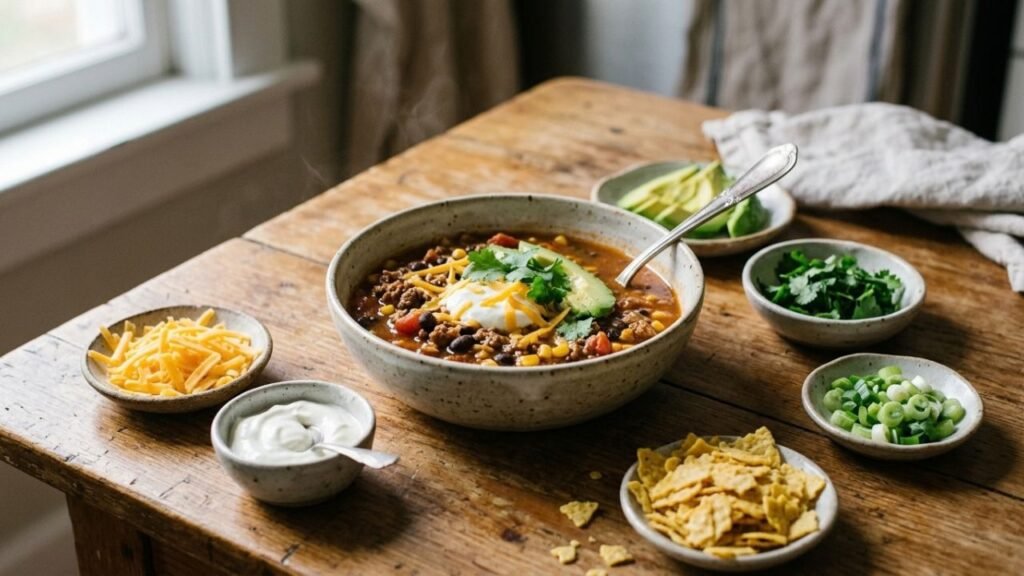
Taco soup is naturally soft and hearty, so the toppings have an important job beyond making the bowl look inviting. They introduce different textures, temperatures, and flavors that keep each spoonful from feeling too heavy.
Shredded cheddar or Monterey Jack brings a creamy richness, while sour cream adds a cool contrast to the warm spices. Avocado keeps things mild and smooth, and cilantro or green onion adds a fresh note.
For some crunch, finish the bowl with crushed tortilla chips. You can also serve the toppings separately, allowing everyone to add as much cheese, heat, creaminess, or crunch as they like.
A pot that gets better the next day
Taco soup is easy to save for another meal, which makes it a practical choice when you want dinner to stretch beyond one night. Once the soup has cooled, transfer it to a covered container and keep it in the refrigerator. For more detailed guidance on handling cooked leftovers, see the USDA’s recommendations for How do I handle leftovers safely?
A 2–3 day window can work well, although the actual time depends on how quickly the soup was cooled and how consistently cold your refrigerator stays.
When reheating, warm the soup gently on the stovetop or in the microwave until heated through. If it has thickened in the fridge, add a small splash of broth or water and stir. Keep toppings separate and add them after reheating for better texture.
The mistakes that quietly ruin taco soup
Adding everything at once.
This can leave the beef pale and the flavor less developed. Browning the meat first gives the soup a stronger base.
Using too much taco seasoning.
More seasoning does not automatically mean more flavor. Taco seasoning can contain quite a bit of salt, so adding extra without tasting can make the soup unbalanced.
Making the soup too thick.
It is easy to let taco soup drift into chili territory. If you want a soup rather than a thick stew, adjust the consistency with a little more broth.
Skipping the final lime.
A small amount of acidity can make a heavy, tomato-based soup taste brighter. Add it near the end so its fresh flavor remains noticeable.
Overcooking the corn and beans.
They are already cooked, so they do not need prolonged cooking. A gentle simmer is enough to bring everything together.
Small details that make a difference
1. Can I make taco soup without beef?
Yes. Ground turkey, ground chicken, or additional beans can replace the beef. If using lean meat, you may need a little extra oil to keep the base from becoming too dry while browning.
2. Can I make it spicier?
Yes. Add diced jalapeño, extra green chiles, cayenne, or hot sauce. It is easier to increase the heat gradually than to rescue a soup that has become too spicy.
3. Can I use different beans?
Absolutely. Kidney beans, cannellini beans, or additional black beans can work. The texture will change slightly, but the basic soup will still hold together.
4. Why is my taco soup too watery?
Let it simmer uncovered for a little longer. Evaporation will concentrate the soup without requiring a thickener. You can also reduce the amount of broth next time.
5. Can I freeze taco soup?
It can generally be frozen, although the texture of some ingredients may change after thawing and reheating. Cool it appropriately, freeze it in a suitable airtight container, and leave some room for expansion.
Close up
A good taco soup does not need a long ingredient list or complicated technique. Its strength comes from getting a handful of familiar ingredients to work together: browned beef, seasoned tomatoes, creamy beans, sweet corn, a little chili heat, and a fresh finish.
That makes it useful beyond this particular recipe. Once you understand how those elements balance each other, you can adjust the soup to suit what is already in your kitchen without losing what makes taco soup satisfying in the first place.