Beet root, commonly shortened to beet, has been part of European and Mediterranean food traditions for centuries, valued as much for its intense color as for its earthy taste. Today, its juice has a different reputation. It is often associated with natural energy, better circulation and athletic performance, largely because beetroot contains naturally occurring nitrates. That is also why you may see it described simply as beet juice or discussed as a nitrate-rich drink. The interest is less about the bright red color in your glass and more about what happens after those compounds enter the body.
The problem is knowing where beet root juice genuinely helps and where it may cause trouble. This article looks at both sides, including the side effects worth noticing.
Where the benefits become genuinely interesting
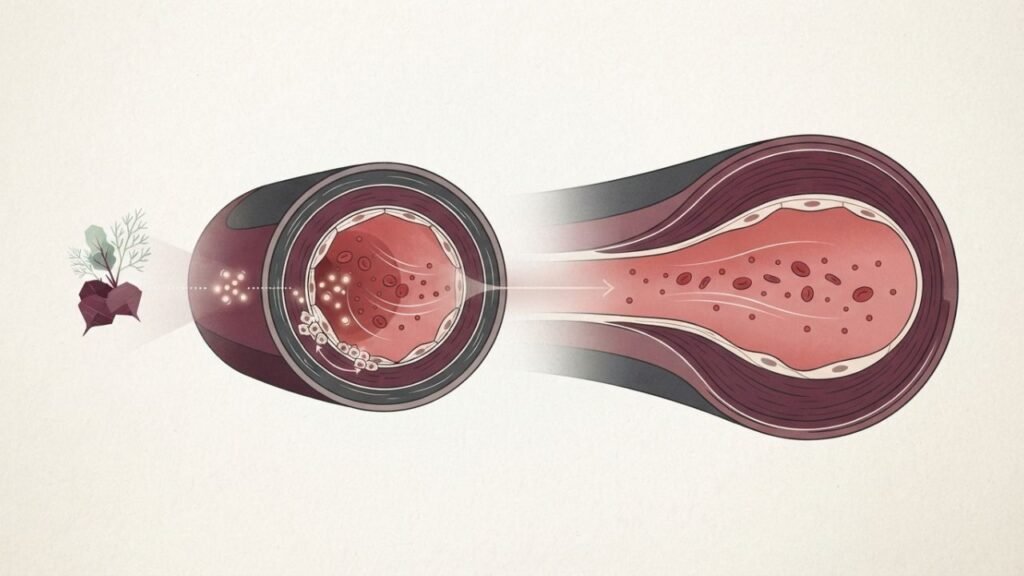
Blood pressure support
Beetroot juice is most often discussed in relation to blood pressure because nitric oxide plays a role in how blood vessels relax and widen.
Research has associated nitrate-rich beet root consumption with modest reductions in blood pressure in some people. That does not make beetroot juice a treatment for hypertension, and it should not be viewed as a substitute for medication or medical advice.
Its more realistic place is as one small part of an eating pattern that already supports cardiovascular health.
Exercise and oxygen efficiency
The sports connection is not entirely marketing hype. Nitrate has been studied for its possible influence on oxygen use and exercise efficiency.
Some research suggests beet root juice may help certain people perform better during endurance or high-intensity activity. But this is where exaggerated claims often appear. It does not suddenly make an untrained person exceptionally fit, and benefits have not appeared consistently across every type of exercise.
For someone already training, the potential advantage is better understood as a small physiological assist, not a shortcut.
A concentrated source of beet compounds
Beetroot contains naturally occurring plant compounds, including betalains, which are responsible for much of its distinctive red-purple color.
These compounds have attracted scientific interest because of their antioxidant and other biological properties. But laboratory interest should not automatically be translated into claims that beetroot juice prevents disease or “detoxes” the body.
The sensible takeaway is simpler: beet root brings several biologically active compounds to the diet, and juice provides them in a concentrated form.
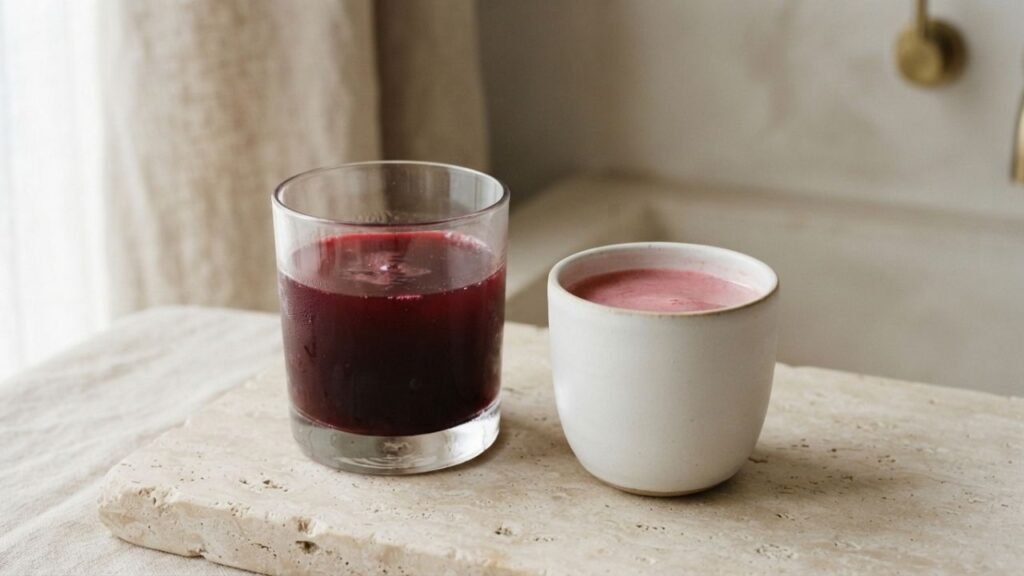
The Red Surprise After Drinking Beetroot Juice
One of beetroot’s strangest effects is also one of the easiest to mistake for a medical problem.
After consuming beet root, some people notice that their urine or stool becomes pink, red or reddish-purple. This is commonly known as beeturia and can look surprisingly dramatic.
The color itself is not necessarily a sign of bleeding. However, unexplained blood in the urine should never automatically be attributed to beetroot, particularly when no beetroot has recently been consumed or when other symptoms are present.
That small distinction is worth remembering because the appearance can be alarming even when the cause is dietary.
When a healthy drink becomes less comfortable
Digestive discomfort
Beet root juice does not suit every stomach. Some people may experience nausea, loose stools, abdominal discomfort or other digestive complaints, particularly when consuming larger quantities.
There is no prize for drinking more than your body comfortably tolerates. If a food repeatedly causes discomfort, increasing the amount in pursuit of a supposed health benefit makes little sense.
Kidney-stone considerations
Beets contain oxalates, which can matter for people who are susceptible to certain types of kidney stones.
This does not mean beet root is universally bad for the kidneys. It means the context changes for someone with a history of oxalate-related stones. A food that is perfectly reasonable for one person may need more consideration for another.
Blood pressure going too low
Because beet root juice may contribute to lower blood pressure, people who already have low blood pressure need to be more cautious about treating it as an everyday supplement.
The same consideration applies to people taking medication that lowers blood pressure. Combining several blood-pressure-lowering influences can produce a different result from consuming beetroot as part of an ordinary meal.

A smarter way to think about regular consumption
The biggest mistake is treating beetroot juice as a magic health product rather than a food with particular properties.
If the goal is general nutrition, there is little reason to believe that enormous quantities are automatically better. If the goal is exercise performance, consistency of training, sleep, hydration and overall nutrition remain far more important than one drink.
For cardiovascular concerns, beetroot juice should also sit within the bigger picture rather than being treated as a standalone solution.
A useful rule is to ask what job you expect the juice to do. If the answer is vague—“because it is healthy”—there may be no reason to consume large amounts. If there is a specific reason, such as exploring its potential effect on exercise or blood pressure, the relevant benefits and possible drawbacks become much easier to weigh.
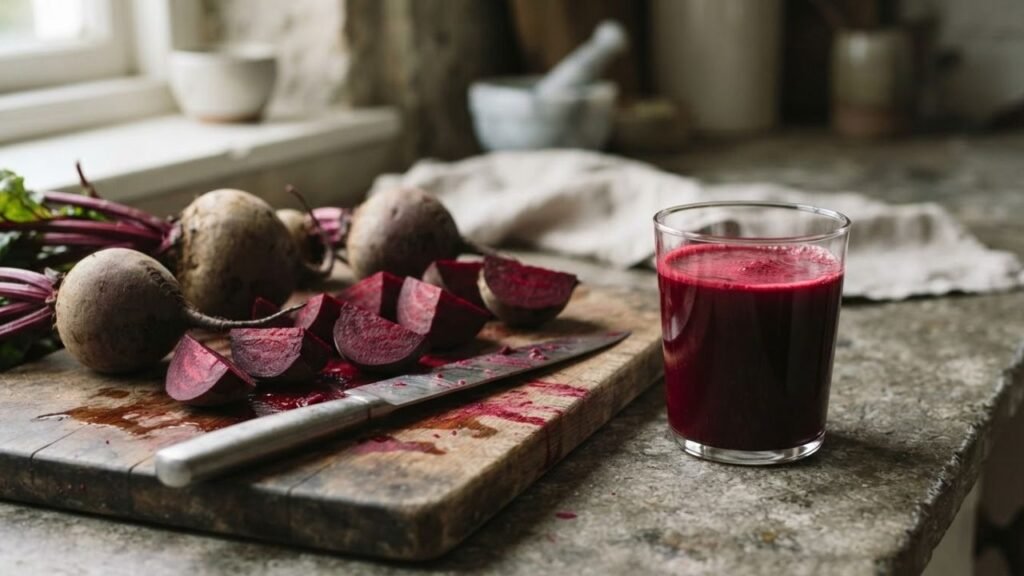
Small details worth remembering
- Red urine does not automatically mean blood. Beetroot can change urine color dramatically.
- More is not necessarily better. Concentrated drinks can be harder on the stomach when consumed in excessive amounts.
- Exercise benefits vary. Some people may notice an advantage, while others may notice little difference.
- Blood pressure matters. People with low blood pressure or those using blood-pressure-lowering medication should be more cautious.
- Kidney-stone history changes the conversation. Oxalates can be relevant for people prone to certain stones.
- Whole beets and beetroot juice are not identical. Juicing changes the food’s physical form and typically removes much of its fiber. For broader information about fiber and its role in a balanced diet, readers can refer to reliable nutrition guidance from a recognized health authority.
Quick answers before you make it a daily habit
1. Can beetroot juice make urine red?
Yes. Beetroot pigments can cause pink, red or reddish urine in some people. If the discoloration occurs without a recent beetroot intake, it should not automatically be dismissed as beeturia.
2. Is beetroot juice good for blood pressure?
It may modestly lower blood pressure in some people because of its nitrate content. It is better viewed as a dietary option than as a replacement for blood-pressure treatment.
3. Does beetroot juice improve energy?
Not in the simple sense of providing a stimulant-like energy boost. Its potential exercise benefit is connected more closely to blood flow and how the body uses oxygen during physical activity.
4. Can it cause stomach problems?
Yes. Some people experience digestive discomfort, nausea or loose stools, particularly with larger amounts.
5. Is beetroot juice safe for everyone?
No food has exactly the same effect on every person. People with low blood pressure, certain kidney-stone histories or relevant medication use may need to consider beetroot differently from the average healthy adult.
6. Does beetroot juice detox the body?
There is no need to rely on that claim. The body already has organs responsible for processing and eliminating waste, and beetroot juice should not be presented as a special detoxification treatment.
The better conclusion is less dramatic
Beetroot juice is interesting because its benefits go beyond simply being labeled a “healthy” drink. Its natural nitrates may support blood flow and modestly influence blood pressure, while some people may also notice an advantage during certain types of exercise. But those benefits are only part of the picture. Red urine, digestive discomfort, oxalates and possible blood-pressure effects are worth knowing before making it a daily habit.
The sensible approach is neither to dismiss beetroot juice nor treat it as a miracle drink. Know why you are drinking it, understand how it may affect you, and pay attention to your body’s response.