The Manhattan is one of those classic whiskey cocktails whose name has become almost as familiar as the drink itself. Traditionally associated with New York and dating back to the late 19th century, it belongs to the old-school cocktail family that helped establish the American bar as a place of serious mixing rather than simply pouring spirits. It is sometimes called a “Manhattan cocktail,” but Manhattan is enough. What makes a Manhattan recipe interesting today is how little has changed around it. The drink still has the dark character people expect from a whiskey cocktail, yet its balance can shift noticeably depending on the whiskey, vermouth, dilution and temperature.
Making a Manhattan at home can leave you with a drink that tastes too sweet, too sharp, or out of balance. The right proportions and a few small details are what this recipe helps you get right.
Before You Start
A Manhattan does not need a long preparation window, but chilling the glass and getting your ingredients ready before mixing makes the final drink easier to control. The actual mixing is quick once everything is in place.
| Stage | Approx. Time |
| Prep | 5 minutes |
| Mixing | 2–3 minutes |
| Total | 7–8 minutes |
These are useful working times rather than fixed rules. Your own pace, the temperature of your ingredients and how quickly your glass chills can change the timing, so take the table as a guide rather than something you need to follow to the second.
What Goes Into a Proper Manhattan
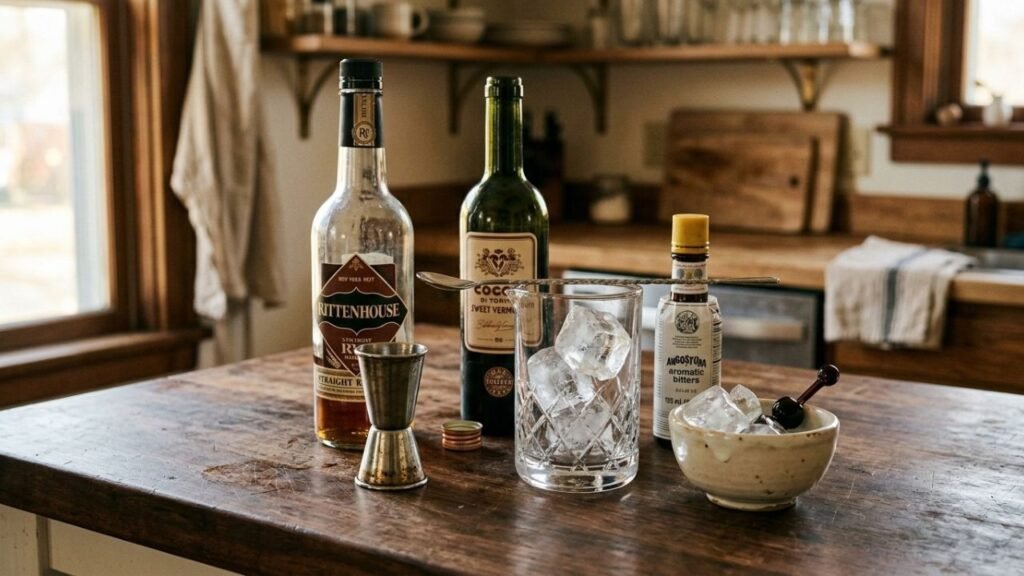
For 1 cocktail, you will need:
- 50 ml rye whiskey
- 20 ml sweet red vermouth
- 1 dash Angostura bitters
- 1 cocktail cherry, for serving
- Ice, for chilling and stirring
The proportions above follow a widely recognized classic specification. If you prefer a slightly less whiskey-forward drink, the amount of vermouth can be adjusted, but it is worth starting with the classic balance.
A Few Easy Ingredient Swaps
Some ingredients may not be sitting in your kitchen cabinet, particularly sweet vermouth or cocktail cherries. Substitutions are possible, but they will change the finished drink.
| Original ingredient | Possible replacement | What changes |
| Rye whiskey | Bourbon | Softer, rounder and generally sweeter |
| Sweet red vermouth | Another quality sweet vermouth | Flavor changes according to its herbal and spice profile |
| Cocktail cherry | Brandied cherry | Richer, deeper fruit character |
| Angostura bitters | Aromatic bitters | Similar role, but the spice profile can differ |
Rye is a useful starting point because its drier, spicier character gives the Manhattan definition. Bourbon works well when you want something softer and fuller.
The important substitution to avoid is replacing sweet vermouth with whatever sweet ingredient happens to be available. Vermouth is not there only to add sweetness. It contributes herbal, wine-like and spiced notes that are part of the cocktail’s identity.
The Part Where the Manhattan Comes Together
Once the glass is cold and your ingredients are measured, the drink itself takes only a couple of minutes. This is a cocktail where careful handling matters more than complicated technique.

Directions
- Chill the glass.
Place your cocktail glass in the freezer for a few minutes, or fill it with ice and cold water while you prepare the drink. - Build the cocktail.
Add the rye whiskey, sweet vermouth and Angostura bitters to a mixing glass. - Add ice.
Fill the mixing glass generously with ice. Larger, solid pieces are useful because they chill the drink without melting as quickly as small, wet ice. - Stir.
Stir steadily for around 20–30 seconds. The aim is to chill and gently dilute the cocktail rather than whip air into it. - Strain.
Empty the temporary ice from your serving glass, then strain the Manhattan into the chilled glass. - Finish with a cherry.
Add one cocktail cherry and serve immediately.
The drink should arrive cold, smooth and clear, with enough dilution to take the sharp edge off the whiskey without making the cocktail watery.
What to Look for in the Glass
A good Manhattan has a particular kind of quietness to it.
The color should be deep amber to reddish brown, depending on the whiskey and vermouth. It should look clear rather than cloudy, while the aroma should let you notice the whiskey without the vermouth disappearing behind it.
Taste it before reaching for another ingredient.
When the whiskey dominates with a hot alcoholic edge, the drink may need more dilution. An unusually sweet, heavy profile can indicate that the vermouth is overpowering the whiskey or that the proportions need adjusting. Meanwhile, muted flavors may suggest tired vermouth or insufficient temperature and dilution.
That is more useful than memorizing a single “perfect” Manhattan. The glass tells you what needs attention.
Rye or Bourbon Changes the Mood
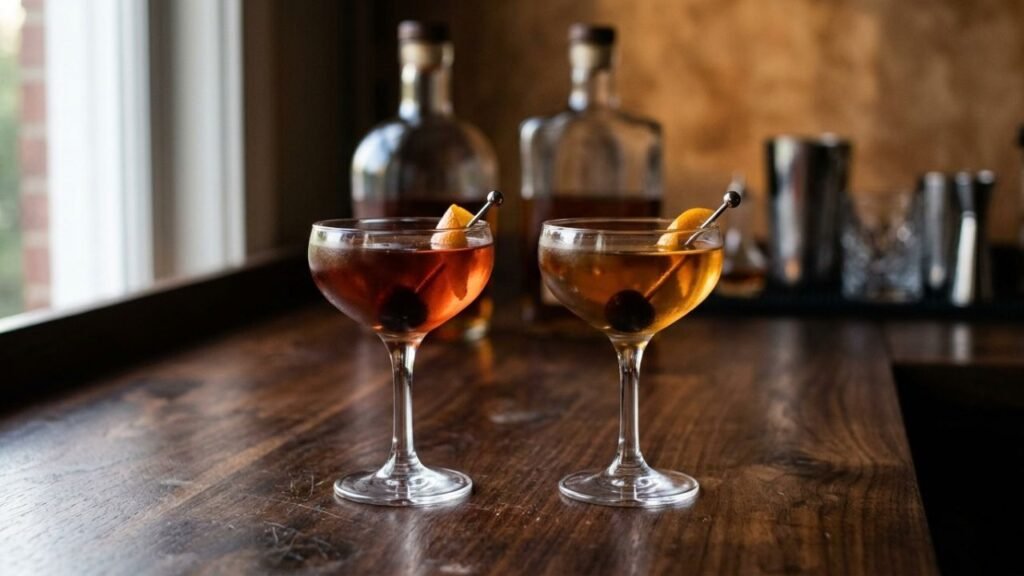
The choice between rye and bourbon is one of the easiest ways to personalize the drink without turning it into a completely different cocktail.
Rye whiskey tends to bring pepper, spice and a drier finish. It makes Manhattan feel sharper and more structured.
Bourbon usually brings more sweetness, vanilla, oak and rounded richness. The result can feel softer and heavier on the palate.
If you are buying a bottle specifically for Manhattans, choose something you would also be happy to drink on its own. There is little advantage in hiding an unpleasant whiskey behind vermouth and bitters.
Serving It Without Overdoing It
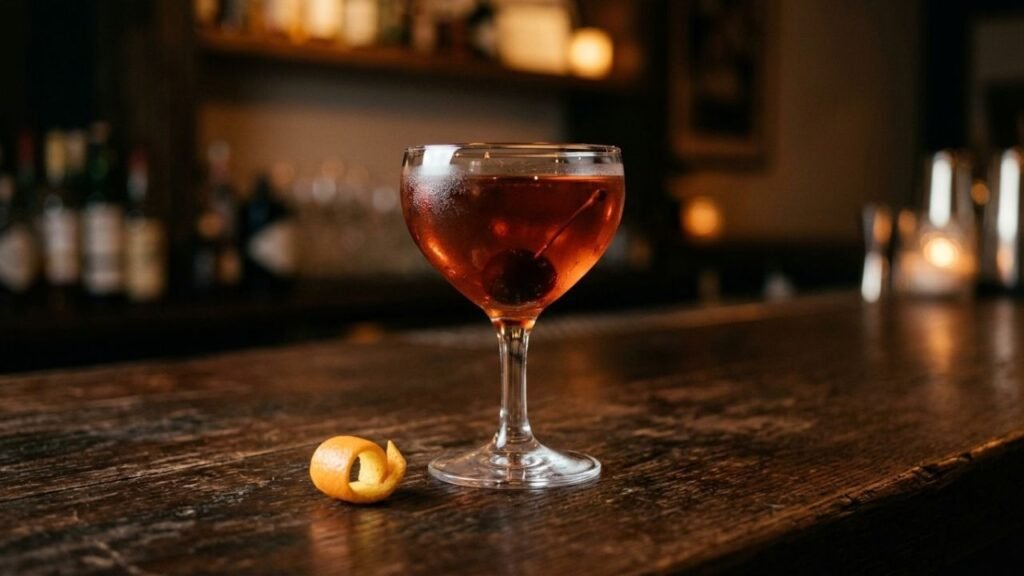
Serve a Manhattan in a chilled coupe or cocktail glass, with a single cocktail cherry.
There is no need for a pile of garnish. The drink has already done most of its visual work through its color and clarity. A simple glass also suits its character: the Manhattan is an old cocktail, but it does not need to look old-fashioned.
For a small variation, an orange twist can add a brighter citrus aroma. Express the peel over the surface of the drink and discard it or place it beside the cherry.
Small Mistakes That Make a Big Difference
Using warm glassware.
A perfectly mixed cocktail loses some appeal if it immediately warms in the glass. Give the glass a few minutes of chilling time.
Using poor-quality or old vermouth.
Once opened, sweet vermouth is better kept refrigerated. If a bottle has been open for a long time and smells or tastes tired, replacing it can make more difference than upgrading the whiskey.
Shaking Manhattan.
The classic preparation is stirred, and why stirring changes a cocktail becomes especially noticeable with a clear, spirit-forward drink like this. Shaking introduces more aeration and changes its texture and appearance.
Using too little ice.
A small amount of ice melts quickly and can make temperature and dilution harder to control. Fill the mixing glass properly.
Stirring only to mix the ingredients.
The ice is doing more than cooling the drink. It is also adding a controlled amount of water. Stopping too early can leave the cocktail tasting overly hot.
Adding too much bitters.
Bitters are concentrated. A little can connect the whiskey and vermouth; too much can push the drink toward a noticeably bitter finish.
Few Things Worth Knowing
1. Can I make a Manhattan with bourbon?
Yes. Rye is a classic choice, but bourbon produces a softer and rounder version. Start with the same proportions and compare the two.
2. Does sweet vermouth need refrigeration?
Yes, refrigeration is a sensible way to preserve an opened bottle. Vermouth is a fortified wine, so it does not behave like an unopened bottle of whiskey once exposed to air.
3. Can I make Manhattan sweeter?
You can increase the vermouth slightly, but make small adjustments. Too much can quickly make the drink feel heavy.
4. Should a Manhattan be served over ice?
The classic presentation is strained into a chilled cocktail glass without ice. Serving it over a large cube is a common variation and keeps it cold for longer.
5. Can I prepare a Manhattan ahead of time?
You can mix it ahead when convenient, particularly for serving several people, but temperature and dilution still matter. If preparing a batch, keep it chilled and avoid treating it like a drink that can sit indefinitely without changing.
The Classic Is Still Worth Getting Right
Manhattan survives because it does not need much to make its point. Whiskey provides the backbone, vermouth gives it depth and bitters pull the two together. Everything else is about control: temperature, dilution, proportions and the condition of what you pour into the glass.
That is why making one at home can be more rewarding than it first appears. Once you understand what each part contributes, the recipe stops being a fixed set of numbers and becomes something you can taste, adjust and make your own.