Fajitas are one of those dishes that seem almost too simple to get wrong—seasoned meat, peppers, onions, and warm tortillas arriving at the table still sizzling. The name itself comes from faja, the Spanish word for “strip” or “belt,” a reference to the traditional cut of beef used for fajitas. What began as a humble preparation built around skirt steak eventually became a familiar Tex-Mex favorite, with restaurants developing their own versions of that smoky, tangy, deeply seasoned flavor. Getting that flavor at home starts with the right fajita marinade, but the marinade is only part of the equation.
The problem is getting that deep, tangy fajita flavor without making the meat too sour or leaving the seasoning only on the surface. Here’s how to get the balance right.
Before You Begin
| Step | Time |
| Prep | 15 minutes |
| Marinating | 2–4 hours |
| Cooking | 10–15 minutes |
| Total active time | About 25–30 minutes |
These are useful working times rather than fixed rules. Your prep and cooking time can be shorter or longer depending on how quickly you work, the size of the meat pieces, and how much food you are making.
What you need
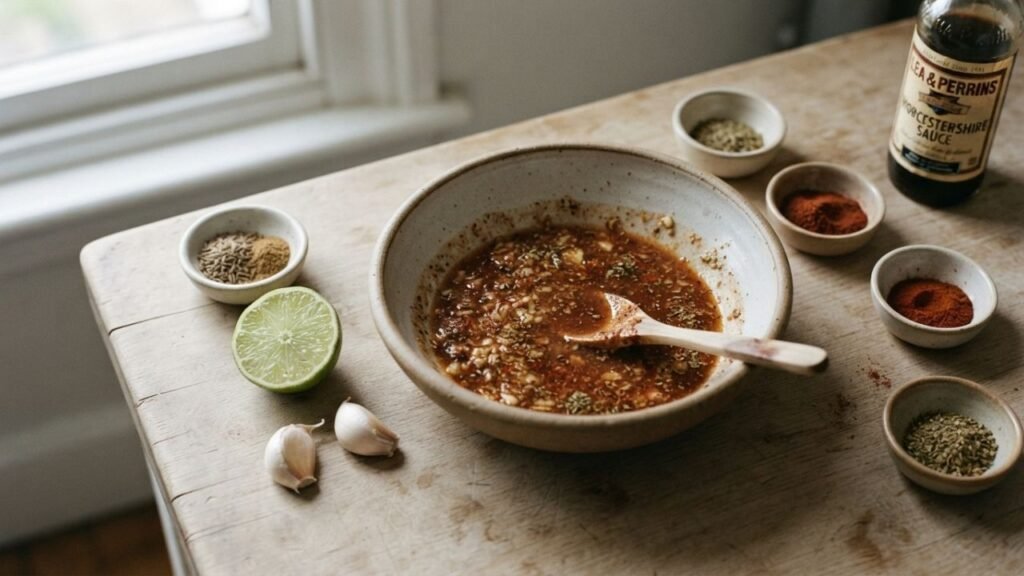
For the fajita marinade
- ¼ cup fresh lime juice
- 2 tablespoons neutral oil
- 1 tablespoon Worcestershire sauce
- 2 garlic cloves, finely minced
- 1 teaspoon ground cumin
- 1 teaspoon chili powder
- ½ teaspoon dried oregano
- ½ teaspoon smoked paprika
- 1 teaspoon salt
- ½ teaspoon black pepper
- ½ teaspoon honey or brown sugar
- 1 small jalapeño, finely chopped, optional
What Goes Into the Fajitas
- 1 pound skirt steak, flank steak, or boneless chicken
- 1 large onion, thinly sliced
- 1–2 bell peppers, sliced
- 1 tablespoon oil, for cooking
- Fresh lime wedges
- Fresh cilantro, optional
- Warm flour or corn tortillas, for serving
A few easy swaps when the pantry is missing something
Some of the ingredients do specific jobs, so the best replacement depends on what you are trying to preserve.
| Ingredient | Possible replacement | What changes |
| Fresh lime juice | Lemon juice | Still bright and acidic, but less distinctly lime-like |
| Worcestershire sauce | Soy sauce | More salty and savory, with less tang |
| Smoked paprika | Regular paprika | Keeps the color and mild pepper flavor but loses some smokiness |
| Dried oregano | Mexican oregano | A slightly more earthy, pronounced flavor |
| Honey or brown sugar | Maple syrup | Similar sweetness with a slightly different finish |
| Skirt steak | Flank steak | Leaner texture and a slightly different bite |
Directions
1. Build the marinade
Add the lime juice, oil, Worcestershire sauce, garlic, cumin, chili powder, oregano, smoked paprika, salt, pepper, and honey or brown sugar to a bowl. Stir until everything is evenly combined.
Add the chopped jalapeño if you want a little more heat.
2. Give the meat some time
Place the meat in the marinade and turn it until well coated. Cover and refrigerate for about 2–4 hours. For more guidance on keeping marinated meat safely chilled, see the USDA FSIS guide to What is the safe way to marinate poultry?
There is no need to chase an exact minute here. Thinner pieces will take on the flavor more quickly, while thicker pieces can use a little more time.
3. Get the vegetables ready
Slice the onion and peppers into fairly even pieces. Keeping them similar in size helps them cook at roughly the same rate.
If you like your vegetables with noticeable char, avoid cutting them too thin. Slightly larger pieces hold their shape better and give you those browned edges without turning soft too quickly.
4. Prepare the meat for the pan
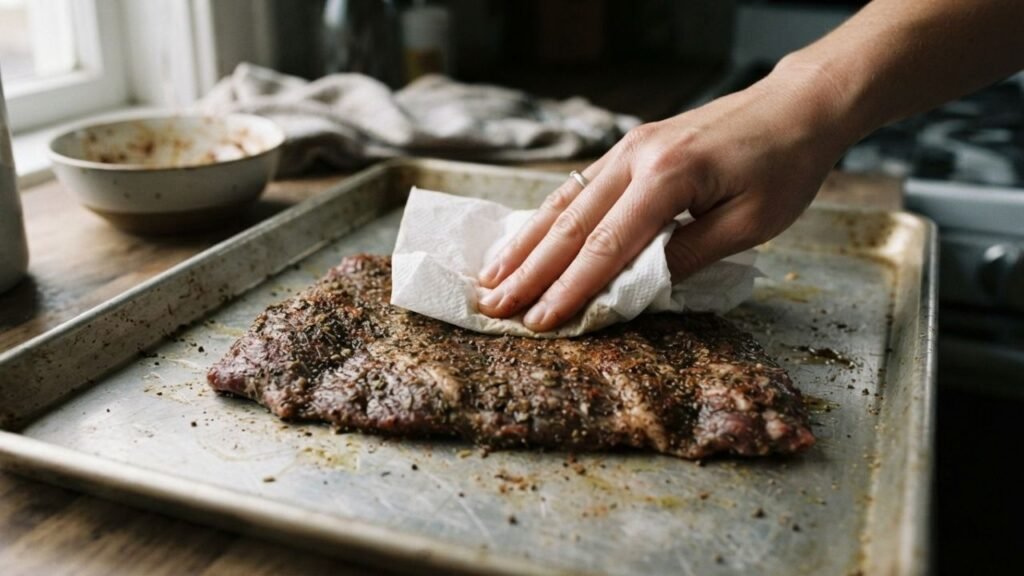
Remove the meat from the marinade and allow the excess to drip away. Pat the surface lightly with paper towels.
This small step matters. A dripping-wet surface creates steam in the pan, while a drier surface has a much better chance of developing the dark, browned edges associated with restaurant fajitas.
5. Cook over high heat
Heat a heavy skillet or cast-iron pan until properly hot. Add a little oil, then place the meat in the pan without crowding it.
Cook until well browned, turning as needed. If you are cooking a large amount, work in batches rather than filling the entire pan at once.
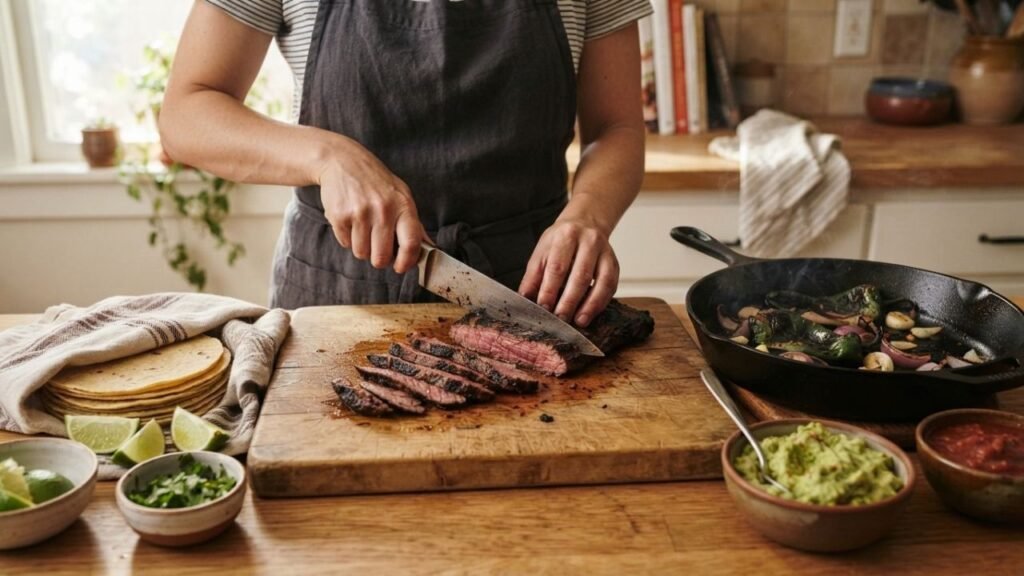
Once the meat is cooked, let it rest briefly before slicing it against the grain.
6. Char the peppers and onions
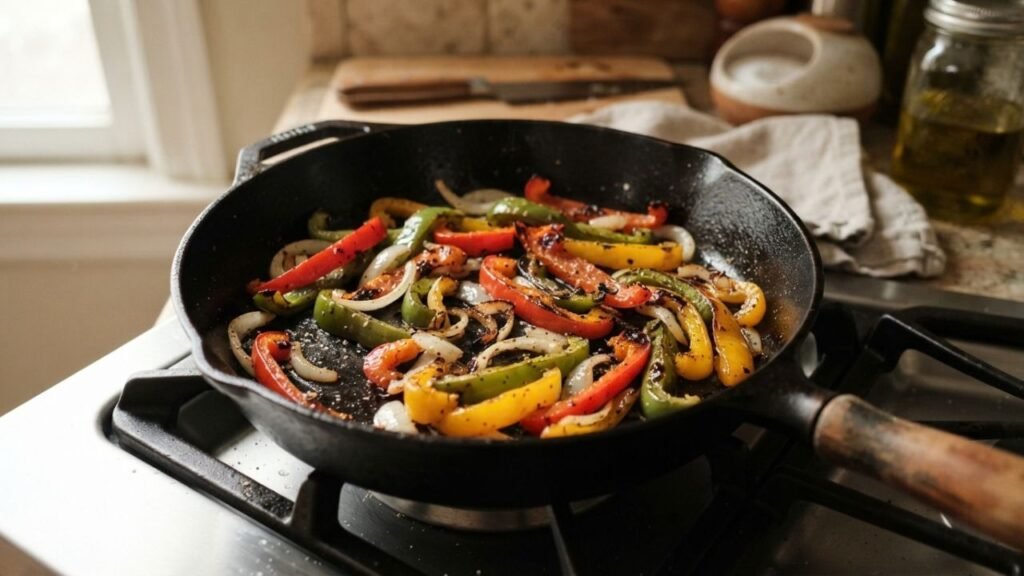
Add a little more oil if necessary, then cook the onions and peppers over high heat.
Let them sit against the hot surface long enough to develop browned spots before moving them around. They should have some color while retaining enough texture to contrast with the tender meat.
Return the sliced meat to the pan briefly, toss everything together, and finish with a squeeze of fresh lime.
What to put on the table
Fajitas are at their best when the toppings add a different texture, temperature, or flavor instead of making the plate heavier. The warm, smoky meat and peppers already bring plenty of richness, so the best additions are usually fresh, cool, creamy, or sharp.
Serve with warm tortillas, lime wedges, chopped cilantro, sliced jalapeños, salsa, guacamole, or sour cream.
A final squeeze of lime is especially good here. Its acidity brightens the browned meat and sweet peppers without covering up the marinade.
If you want to save some for later
The cooked fajita meat and vegetables can be refrigerated and reheated later if that suits your routine. Around 2–3 days is a practical window for many home cooks, but your storage conditions, refrigerator temperature, and handling matter, so use your own judgment rather than treating the timing as a guarantee.
For reheating, warm the fajitas in a skillet rather than overheating them for too long. The goal is simply to bring them back up to temperature without cooking the meat into a dry texture.
The mistakes that flatten the flavor
Too much lime
Acid gives fajitas their familiar brightness, but adding more and more lime does not necessarily make them better. Too much can dominate the spices and leave the meat tasting sharply sour.
Letting the meat drip into the pan
If the meat goes straight from the marinade into a crowded skillet, all that excess liquid has nowhere to go. The result can be pale meat instead of browned meat.
Crowding the skillet
Even a good marinade cannot compensate for a pan packed with meat and vegetables. Give the food enough room to make proper contact with the hot surface.
Moving everything constantly
Fajitas need contact with the pan to develop color. Constant stirring interrupts that process.
Forgetting the final lime
The marinade provides the base flavor, but fresh lime at the end gives the finished dish a cleaner, sharper edge.
FAQs
1. Can I use chicken instead of steak?
Yes. Boneless chicken works well with the same general marinade. Cut it into evenly sized pieces so it cooks consistently.
2. Can I marinate the meat overnight?
You can, but it is not necessary for this recipe. Because the marinade contains lime juice, a shorter marinating period is usually enough to give thin pieces plenty of flavor.
3. Do I have to use Worcestershire sauce?
No. Soy sauce can work as a substitute, although the flavor will become saltier and more savory.
4. Can I make the fajitas without a cast-iron skillet?
Yes. A heavy frying pan or another sturdy skillet can work. What matters most is getting the cooking surface properly hot and avoiding overcrowding.
5. Why don’t my fajitas taste like restaurant fajitas?
The marinade may not be the only issue. Restaurant-style flavor also comes from strong browning, charred vegetables, proper seasoning, and the fresh lime added at the end.
6. Can I make the marinade ahead?
Yes. You can mix the marinade ahead of time and keep it chilled until you are ready to use it.
The last little difference
Restaurant-style fajitas are not really about finding one secret ingredient. The flavor comes from several small decisions working together. A marinade with enough depth, meat that can actually brown, vegetables with some char, and a fresh finish that keeps everything from becoming heavy.
Once those pieces are in place, the dish starts tasting less like meat that happened to be marinated and more like the fajitas you were trying to recreate in the first place.