Beetroot, or simply beet as it is often called, is one of those vegetables that has somehow become strongly associated with one particular plate, the salad. Its deep red-purple color, earthy sweetness and soft texture have made it a familiar ingredient in home kitchens for generations, from hearty soups and pickles to simple vegetable dishes. But beetroot has always had more range than its salad reputation suggests. It can be warm and caramelized, smooth and creamy, sharp and tangy, or paired with its own leafy greens. That range is exactly what makes these beet recipes worth exploring.
The challenge is making beet root feel like part of a proper meal rather than another side salad. These six recipes show you how to take it further.

1. Roast It With Cool, Tangy Yogurt
Roasting brings out the beet’s sweeter side while giving its edges a little more character. Add cool yogurt, lemon and herbs, and you have a dish that feels complete without needing much else.
You Will Need
- 4 medium beets
- 1½ tablespoons olive oil
- ½ teaspoon salt
- ¼ teaspoon black pepper
- ½ cup plain Greek yogurt
- 1 tablespoon lemon juice
- 1 small garlic clove, grated
- 1 tablespoon chopped parsley or dill
Put It Together
- Heat the oven to 400°F (200°C).
- Wash the beets and trim the leafy tops. Leave the skins on.
- Rub them with olive oil and place them in a baking dish. Cover loosely with foil.
- Roast for 45–60 minutes, until a knife slides easily into the center.
- Let them cool slightly, then rub away the skins and cut into wedges.
- Mix the yogurt with lemon juice, garlic and a small pinch of salt.
- Spread the yogurt on a plate and arrange the warm beet wedges over it.
- Finish with herbs and black pepper.
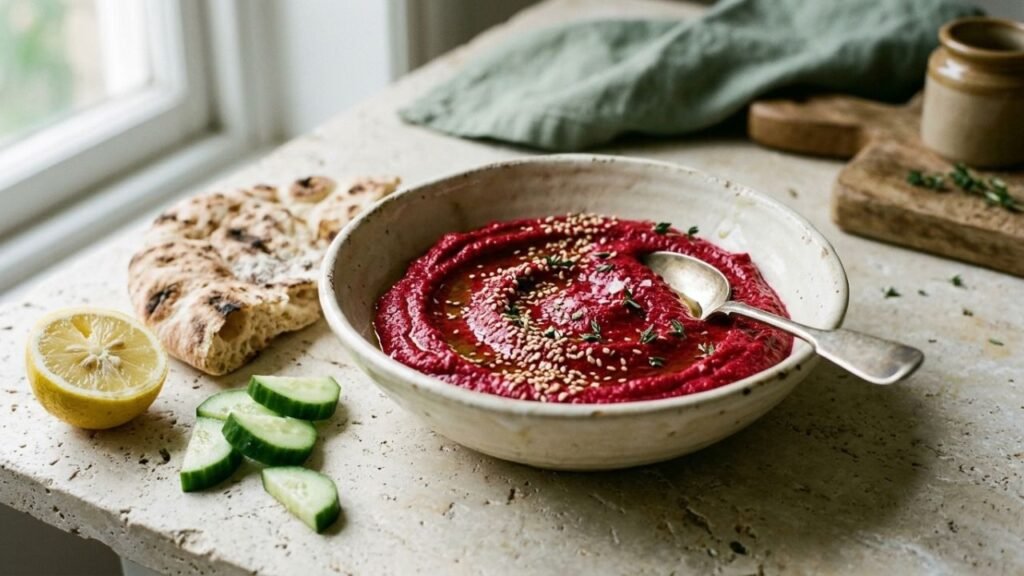
2. Blend It Into a Beet and Tahini Dip
A beet dip is one of the easiest ways to make cooked beet root feel completely different. Tahini adds a nutty, slightly bitter note that keeps the vegetable’s sweetness in check.
What Goes In
- 3 medium cooked beets
- 3 tablespoons tahini
- 1 tablespoon lemon juice
- 1 small garlic clove
- ½ teaspoon salt
- 2–3 tablespoons cold water
- 1 tablespoon olive oil
- Sesame seeds or parsley
Blend and Serve
- Peel the cooked beets and cut them into chunks.
- Add them to a food processor with tahini, lemon juice, garlic and salt.
- Blend until smooth.
- Add cold water, one tablespoon at a time, until creamy.
- Taste and add more lemon or salt if needed.
- Spoon into a bowl and drizzle with olive oil.
- Finish with sesame seeds or parsley.
Serve with flatbread, toast, cucumber or carrots. It also works well as a sandwich spread.
3. Give Roasted Beets a Garlicky Edge
Here, the beet stays simple. Garlic adds savory depth, while balsamic vinegar gives the finished dish the acidity it needs.
What to Gather
- 4 medium beets
- 2 tablespoons olive oil
- 3 garlic cloves
- 1 tablespoon balsamic vinegar
- ½ teaspoon salt
- ¼ teaspoon black pepper
- 2 tablespoons crumbled feta, optional
- Fresh parsley, optional
Roast and Finish
- Heat the oven to 425°F (220°C).
- Peel the beets and cut them into similar-sized wedges.
- Toss with olive oil, garlic, salt and pepper.
- Spread them in one layer on a baking tray.
- Roast for 30–40 minutes, turning once halfway through.
- Remove when tender and browned around the edges.
- Drizzle with balsamic vinegar while hot.
- Add feta and parsley if desired.
Start with a small amount of vinegar and add more only after tasting.
4. Make a Silky Beet Soup
The deep color makes this soup look elaborate, but the ingredient list is short. Potato gives the soup body, onion brings savoriness and lemon keeps the beet from becoming too sweet.
On the List
- 3 medium beets, peeled and chopped
- 1 medium potato, peeled and chopped
- 1 small onion, chopped
- 1 tablespoon olive oil
- 4 cups vegetable stock or water
- ½ teaspoon salt
- ¼ teaspoon black pepper
- 1 tablespoon lemon juice
Simmer and Blend
- Heat the olive oil in a large pot over medium heat.
- Add the onion and cook for 4–5 minutes until softened.
- Add the beets and potato.
- Pour in the stock or water.
- Bring to a boil, then reduce the heat and cover.
- Simmer for 25–30 minutes, until the vegetables are very tender.
- Blend until smooth. If using a countertop blender, work in small batches with hot liquid.
- Season with salt, pepper and lemon juice.
- Add more stock or water if the soup is too thick.
A spoonful of yogurt makes a simple finishing touch.
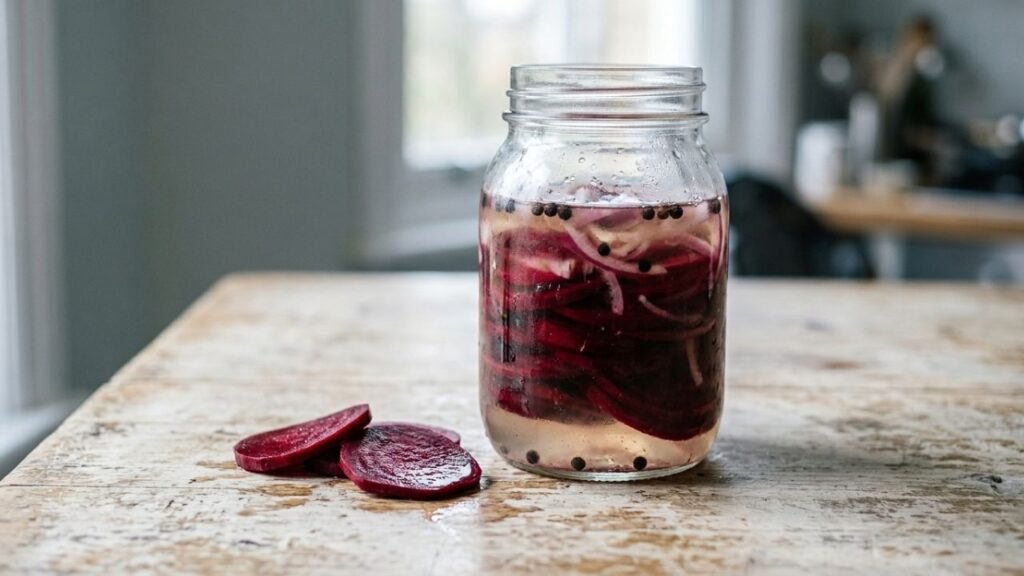
5. Keep Some Beetroot Pickled
Pickling changes the vegetable completely. The earthy sweetness remains, but vinegar gives it a sharper flavor that makes it useful in sandwiches, egg dishes and simple grain bowls.
For This Recipe
- 3 cooked beets
- ½ cup vinegar
- ½ cup water
- 1 tablespoon sugar
- 1 teaspoon salt
- ½ teaspoon black peppercorns
- ½ small red onion, thinly sliced, optional
Pickle the Slices
- Peel the cooked beets and slice them into rounds or wedges.
- Put them into a clean jar or heatproof container.
- Add the sliced onion if using.
- Warm the vinegar, water, sugar and salt in a small saucepan.
- Stir until the sugar and salt dissolve.
- Pour the liquid over the beets.
- Add the peppercorns.
- Let everything cool, then cover and refrigerate.
- Leave for at least a few hours before eating.
A few slices can add acidity and color to an otherwise ordinary meal.
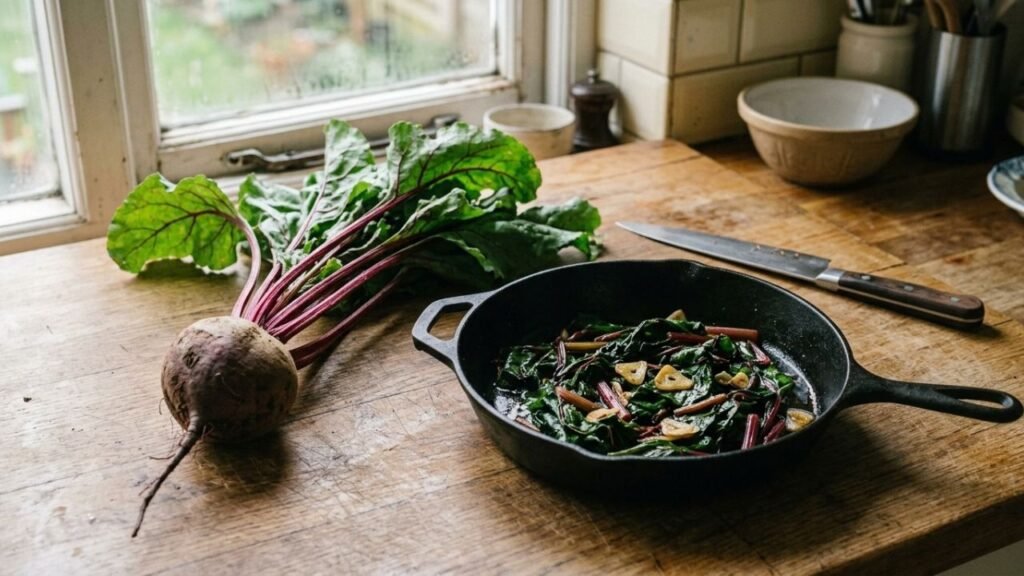
6. Give the Beet Greens Their Own Moment
The leaves are easy to overlook, but fresh beet greens can become a quick savory side. Their flavor is greener and more mineral than the root, which makes them a natural partner for the sweeter beet. The EPA’s Preventing Wasted Food At Home guide also points to edible vegetable parts, including beet greens, as something worth putting to use rather than automatically discarding.
What to Have
- Beet greens from 3–4 beets
- 1 tablespoon olive oil
- 2 garlic cloves, sliced
- ¼ teaspoon salt
- 1 tablespoon lemon juice
- Black pepper
Cook Until Tender
- Wash the greens thoroughly.
- Separate the thicker stems from the leaves and chop both.
- Heat the olive oil in a large frying pan.
- Add the stems and garlic and cook for 2–3 minutes.
- Add the leaves and salt.
- Cook for another 3–5 minutes, stirring occasionally.
- Once tender, turn off the heat.
- Add lemon juice and black pepper.
Serve them with roasted beets, rice, beans or a fried egg.
A Few Beetroot Tricks Worth Knowing
Leave the skin on when roasting whole. It helps protect the beet and makes peeling easier afterward.
Don’t skip the acid. Lemon juice, vinegar and yogurt help balance the vegetable’s natural sweetness.
Keep pieces similar in size. Smaller beet pieces cook faster and can burn before larger pieces become tender.
Taste before adding more seasoning. Beetroot varies in sweetness, so the right amount of salt or acid can change from one batch to another.
Save good beet greens. They cook quickly and give you another useful part of the vegetable.
FAQs
1. Is beetroot the same as beet?
Yes. “Beetroot” is commonly used in British English and many other places, while “beet” is more common in American English.
2. Do beets need to be peeled?
Not before roasting the whole. Once cooked, the skin can usually be rubbed away easily.
3. Why are my beets very sweet?
Beetroot naturally contains sugars. If the flavor feels too sweet, balance it with lemon juice, vinegar or a little more salt.
4. Can beet greens be eaten?
Yes. Fresh greens can be cooked much like other sturdy leafy vegetables.
5. How do I know when beets are cooked?
A knife should slide into the thickest part without much resistance.
6. Can I use ready-cooked beets?
Yes. They are especially convenient for the dip, soup and pickled versions.
7. What tastes good with beetroot?
Lemon, vinegar, yogurt, tahini, feta, garlic and fresh herbs all provide useful contrasts to its earthy sweetness.
The Point Is Not to Hide the Beet
Beetroot becomes much easier to enjoy once it stops being treated as a single-purpose salad ingredient. Roasting brings out its deeper side, tahini turns it into a spread, vinegar makes it bright, and its greens give you another ingredient before anything reaches the bin.
That is the useful lesson behind these recipes, you do not need to disguise beetroot to make it interesting. You only need to give its earthy sweetness something to push against. Once you do, the familiar red root has considerably more range than it first appears.