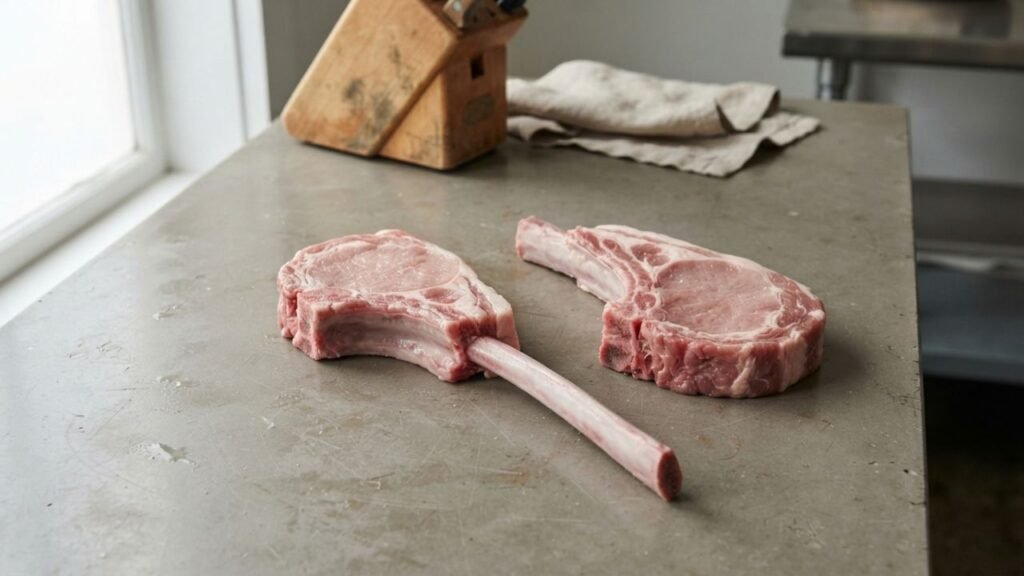
Frenched veal chop, also known as Frenched rib chop, are recognized by the clean section of rib bone left exposed beside the meat. The Frenching itself is a butchery tradition, giving the chop the neat, polished appearance often associated with restaurant and formal dining. But the exposed bone isn’t what makes the cut worth buying. The real differences are easier to spot in the meat. Its thickness, color, fat, trimming, and the balance between what you pay for and what you actually take home.
The problem is that a beautifully trimmed bone can make an average chop look better than it is. This guide shows you what to check before buying.
The Pretty Chop Can Hide a Bad Buy
A beautifully exposed bone does not automatically mean better meat. These six checks help you judge what is actually worth paying for.
1. Start With the Shape, Not the Bone
Look at the meat itself before admiring the exposed rib. A good Frenched veal chop should have a substantial, reasonably even shape, with enough meat around the bone to make the portion feel worthwhile.
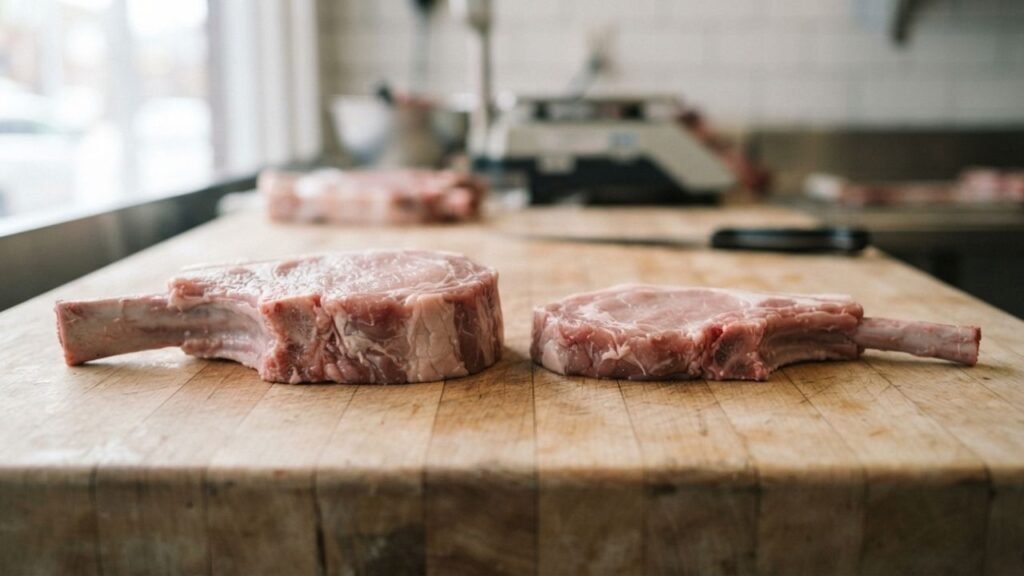
Check the chop from the side if possible. A piece that looks generous from above but becomes noticeably thin toward one end may offer less value than a chop with a more consistent profile.
The bone should complement the meat, not dominate it. If too much meat has been removed simply to create a dramatic exposed rib, you may be paying for presentation rather than a better portion.
2. Learn the Difference Between Pale and Washed-Out
Veal does not have the deep red appearance of beef, so it helps to judge the chop on its own terms. The lean is naturally paler, often ranging from light pink to grayish-pink, and the overall surface should look fresh rather than dull. For more context on how oxygen, storage, and other factors affect meat color, see the USDA’s The Color of Meat and Poultry guidance.
Look for meat that appears reasonably firm, not mushy, excessively dry, or sitting in a large amount of liquid. The edges deserve a closer look too, especially if they appear noticeably darkened or dried.
Color can tell you something, but it is only one part of the picture. Compare the overall condition of the chop rather than searching for one exact shade.
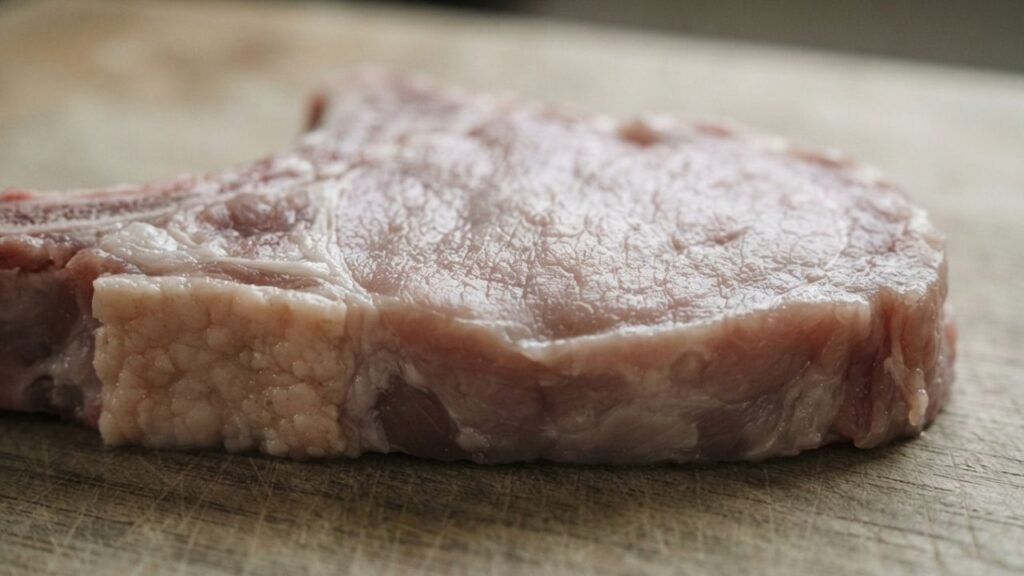
3. Look for Fat in the Right Places
A veal chop is naturally leaner than a heavily marbled beef rib-eye, so don’t judge it by the same standard. What matters is how the fat that is present sits around the meat.
A modest amount of fat is normal, while large, ragged pieces may simply leave you with more trimming and less usable value.
When comparing chops, don’t automatically pick the one with more fat. Look for a balanced relationship between the lean, fat, and exposed bone. A well-proportioned chop usually tells you more than a heavily marbled appearance.
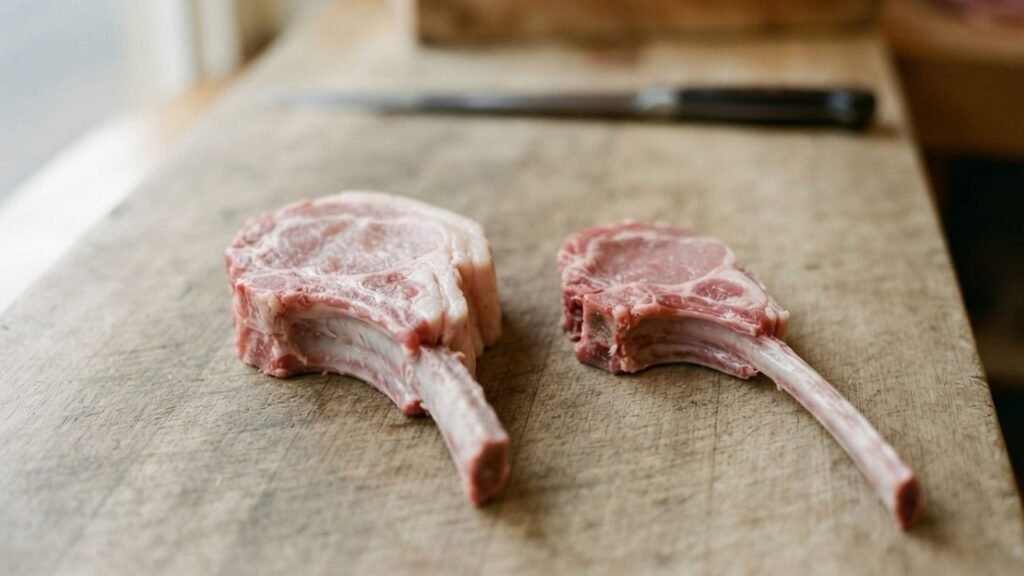
4. Inspect the Frenching Closely
Frenching describes the trimming around the bone, but it doesn’t necessarily tell you how carefully the whole chop has been prepared. The exposed rib gives the cut its distinctive look, yet a clean bone alone says little about the quality or value of the meat attached to it. What matters is whether the trimming looks deliberate and leaves the chop properly proportioned.
The exposed rib should look clean rather than ragged, without scraps of tissue clinging to it. An extremely bare bone isn’t automatically better, since excessive trimming can mean less meat.
A well-prepared chop should keep a generous portion around the rib. If the bone looks unusually long compared with the meat, compare it with another chop before buying. The real question is how much edible meat you’re getting for the price.
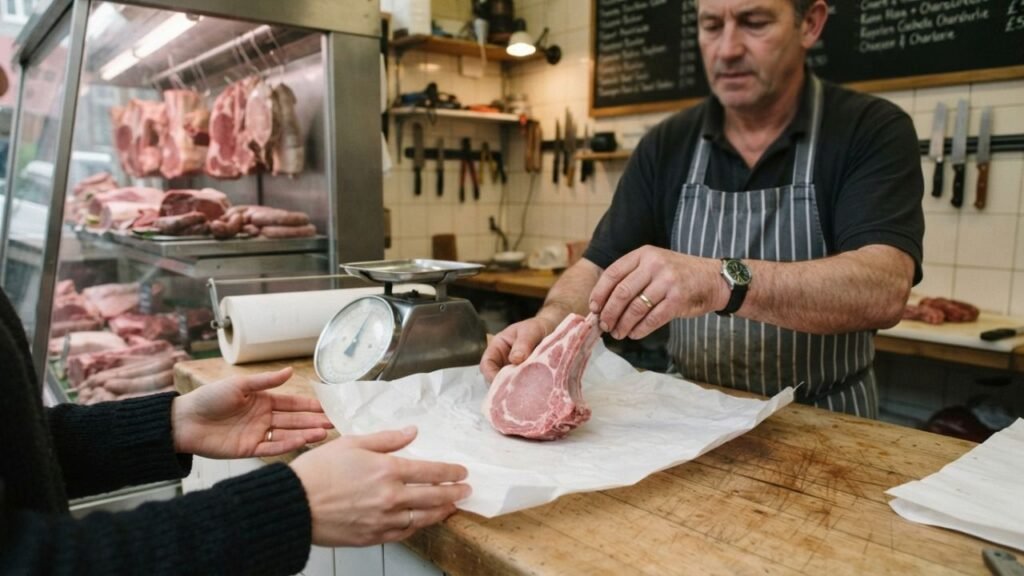
5. Ask the Butcher One Useful Question
You don’t need a long conversation at the counter. One useful question is enough. “When was this cut, and where did it come from?” That can tell you more than a vague label ever will.
Depending on the shop, the butcher may also be able to tell you whether the meat is fresh or previously frozen and whether several chops came from the same rack. That can be useful when buying multiple portions, since similar cuts are easier to compare.
Be cautious with descriptions such as “premium” or “restaurant quality” when nothing specific supports them. Clear information about the meat is far more useful than sales language.
6. Calculate the Value of the Bone
This is the least glamorous check, but one of the most useful. Frenched chops can cost more because the trimming takes extra work and creates a polished presentation, while the exposed bone still adds weight without adding much edible meat.
That doesn’t make the cut poor value. It simply means you should pay attention to the balance between meat and bone.
If one chop has a long, beautifully exposed rib but noticeably less meat for a higher price, the presentation may not justify the difference. The better buy is the chop where the amount and quality of meat make sense for what you’re paying.
What Separates a Good Chop From a Showpiece
The exposed bone may catch your eye first, but it shouldn’t make the decision for you. A Frenched veal chop is better judged by the meat, its proportions, and the quality of the trimming.
The meat should look fresh and well formed, with enough lean around the bone to make the portion worthwhile. The trimming should look deliberate without removing more meat than necessary.
A dramatic bone may photograph beautifully, but it won’t tell you whether the chop is evenly cut or whether you’re paying too much for presentation. Those quieter details are what make the better choice.
Quick Checks at the Counter
Run through this short mental checklist:
- Shape: Is the meat thick and reasonably even?
- Color: Does the lean look naturally pale and fresh?
- Fat: Is the amount sensible for the cut?
- Trim: Is the bone clean without sacrificing too much meat?
- Information: Can the butcher explain its origin and handling?
- Value: Are you paying mainly for meat or heavily for presentation?
Six observations can save you from choosing the chop that merely looks the most impressive.
Frequently Asked Questions
1. Is a Frenched veal chop the same as a rib chop?
Not exactly. A Frenched veal chop is a rib chop prepared with a particular style of trimming that exposes part of the rib bone.
2. Does more exposed bone mean better quality?
No. Frenching describes preparation, not the inherent quality of the meat. Excessive exposure can even mean more edible meat has been removed.
3. What color should veal be?
Veal is generally much paler than beef. Light pink to grayish-pink can be normal, although color alone cannot determine freshness.
4. Should veal chops have a lot of marbling?
Usually not. Veal is generally leaner than many beef cuts, so extensive marbling should not be treated as essential.
5. Is a thick veal chop better than a thin one?
Not automatically, but thickness is useful when judging the portion. A substantial, evenly shaped chop generally gives you more meat and makes comparison easier.
6. Why are Frenched chops often more expensive?
The trimming requires additional butchery work, and the finished cut has a more polished presentation. Some of the price can therefore reflect labor and appearance.
7. What should I ask a butcher before buying?
Ask when the chop was cut and where it came from. You can also ask whether it has previously been frozen and whether several chops came from the same rack.
A Better Way to Choose the Chop
The smartest Frenched veal chop is rarely the one with the longest exposed bone or most polished appearance. It is the one where the meat looks fresh, the portion is substantial, the trimming is clean without being excessive, and the price makes sense.
Once you start looking at the relationship between bone, meat, trim and value, the cut becomes much easier to judge. The Frenching remains part of its appeal, but it no longer makes the decision for you.