Sweet peppers belong to the Capsicum annuum family, the same broad species that includes many familiar chile peppers, but they are generally known for their lack of significant heat. Most people first encounter the bell pepper, but the family extends far beyond its familiar blocky shape. Banana peppers, Cubanelle, pimento, shishito, Padrón, Italian frying peppers, ají dulce, and mini sweet peppers each have their own character. Even color can tell part of the story, with many peppers changing from green to yellow, orange, or red as they mature.
Choosing between sweet peppers can be confusing when similar-looking varieties have different levels of sweetness, texture, and heat. This guide makes those differences easier to understand.
The Pepper Family Is Bigger Than the Bell
The bell pepper has become the familiar definition of a sweet pepper, but it is only one part of the family.
Other varieties can be long, narrow, thin-walled, small, rounded, or slightly wrinkled. Some are closely associated with particular regions, while others are common in supermarkets.
The useful distinction is simple. Sweet peppers are not interchangeable. Shape, thickness, maturity, and heat can all change their character.
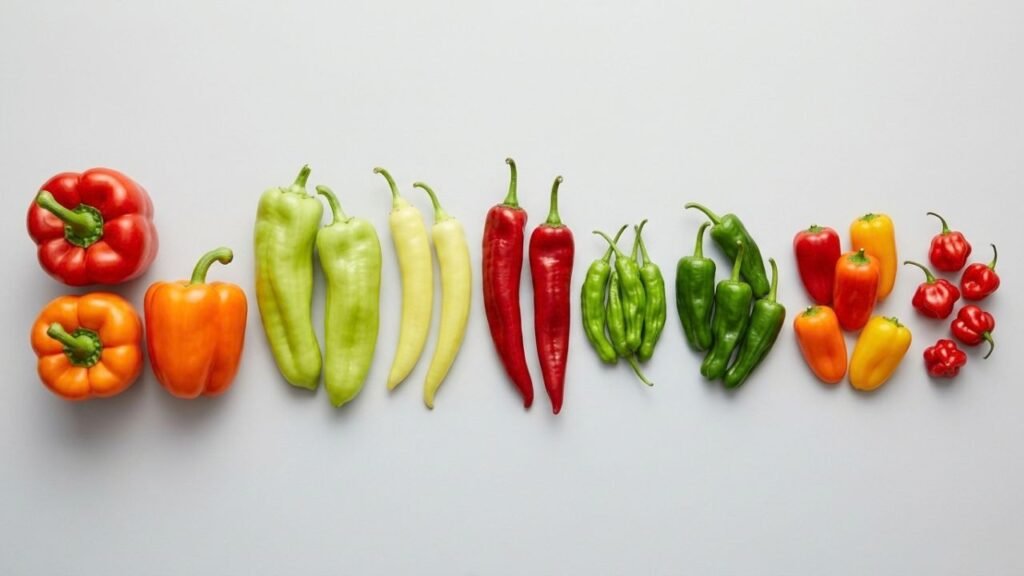
1. Bell Pepper Has More Range Than Its Shape Suggests
The classic bell pepper gets its name from its bell-like form. Green is the color most people know, but red, yellow, and orange varieties are equally familiar.
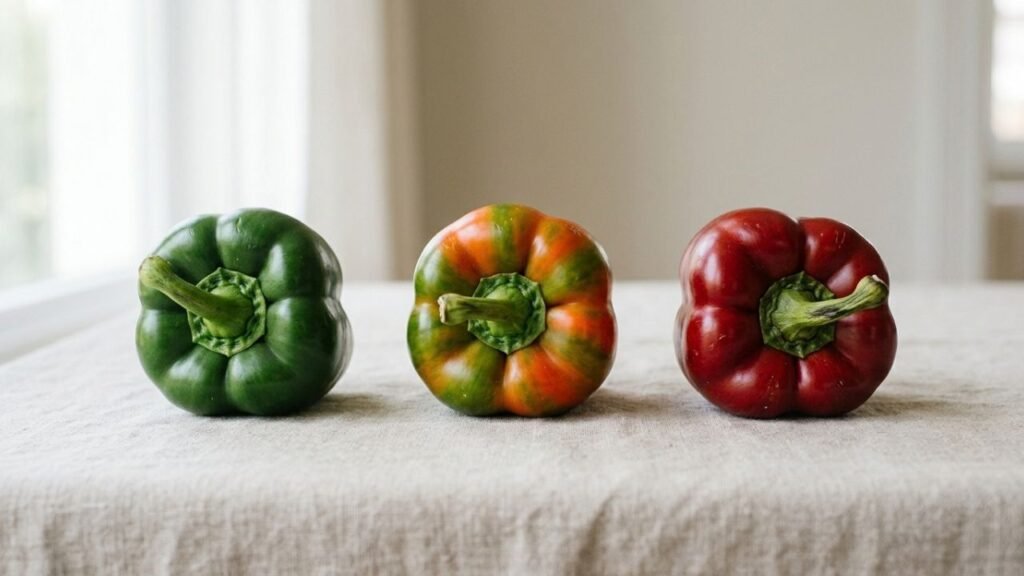
Color can indicate maturity as well as variety, which is one reason different bell peppers don’t always taste alike.
For a substantial, familiar sweet pepper, the bell remains the reference point.
2. Banana Pepper Brings a Different Kind of Sweetness
Banana peppers are long, curved, and usually pale yellow when young. Their flavor is often mild and slightly tangy rather than deeply sweet.
One detail is easy to miss. Banana pepper can refer to both sweet and hotter varieties, so the name alone does not always tell you what you’re buying.
3. Cubanelle Is the Long One Worth Knowing
Cubanelle peppers have a long, slightly irregular shape and thin walls. They are usually greenish-yellow when young and can become warmer in color as they mature.
Their flavor tends to be mild and sweet, while their thin structure gives them a lighter texture than a bell pepper.
4. Pimento Is Small but Hard to Confuse
Pimento, or pimiento, peppers are usually short, rounded, and red when mature. Their thick flesh and concentrated sweetness set them apart from a large bell pepper.
The name is familiar because pimento has long been associated with stuffed olives and pimento cheese.
5. Shishito Makes Small Peppers Interesting
Shishito peppers are slender Japanese peppers with thin, slightly wrinkled skin. They are usually harvested green and are much smaller than bell peppers.
Most are very mild, although an occasional pepper can carry noticeable heat.
That small possibility of heat is part of what makes them different from the predictable bell pepper.
6. Italian Frying Peppers Have a Softer Silhouette
Italian frying peppers are generally long and thin, with a less rigid shape than bell peppers. Marconi and Corno di Toro are familiar examples.
Depending on variety and maturity, they can appear green, yellow, orange, or red.
Their proportions alone make them easy to distinguish from the classic bell.
7. Mini Sweet Peppers Change the Scale
Mini sweet peppers offer a smaller, compact alternative to the familiar bell. Their size is their defining feature, but it also makes them visually distinct.
When buying them, look for firm skin, even color, and no obvious soft spots or damage.
8. Padrón Comes With a Small Element of Surprise
Padrón peppers come from Galicia in Spain and are typically small, green, and slightly wrinkled.
They are generally mild, but individual peppers can sometimes develop considerably more heat.
That makes Padrón a useful reminder that mild does not always mean completely heat-free.
9. Ají Dulce Looks Hotter Than It Is
Ají dulce is one of the more deceptive sweet peppers. Its small, lobed shape can resemble hotter peppers, yet many varieties are mild.
Strongly associated with Caribbean food traditions, it is valued for its distinctive aroma as much as its appearance.
It is a good example of why you cannot reliably judge a pepper by its shape.
The Details That Make Choosing Easier
Color is useful, but it should not be your only clue.
Shape tells you whether you’re looking at a long, narrow pepper or a thick, blocky one.
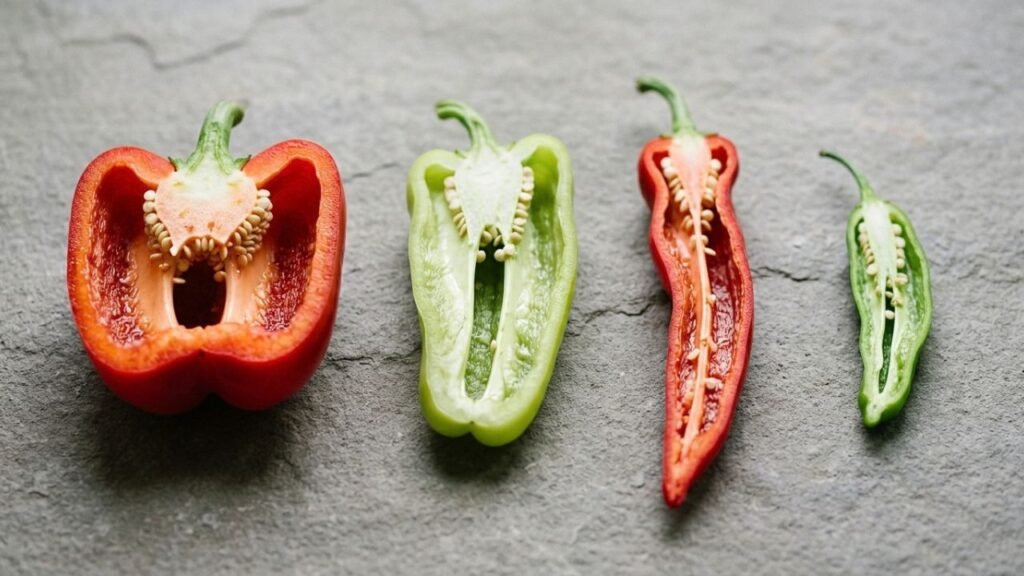
Wall thickness affects texture, with thick-fleshed peppers feeling more substantial than thin-walled varieties.
Maturity can change both color and flavor, particularly when green peppers develop into red, orange, or yellow forms.
Heat is another distinction worth remembering. Sweet and mild are related terms, but they are not absolute guarantees.
What to Look For When Buying Them
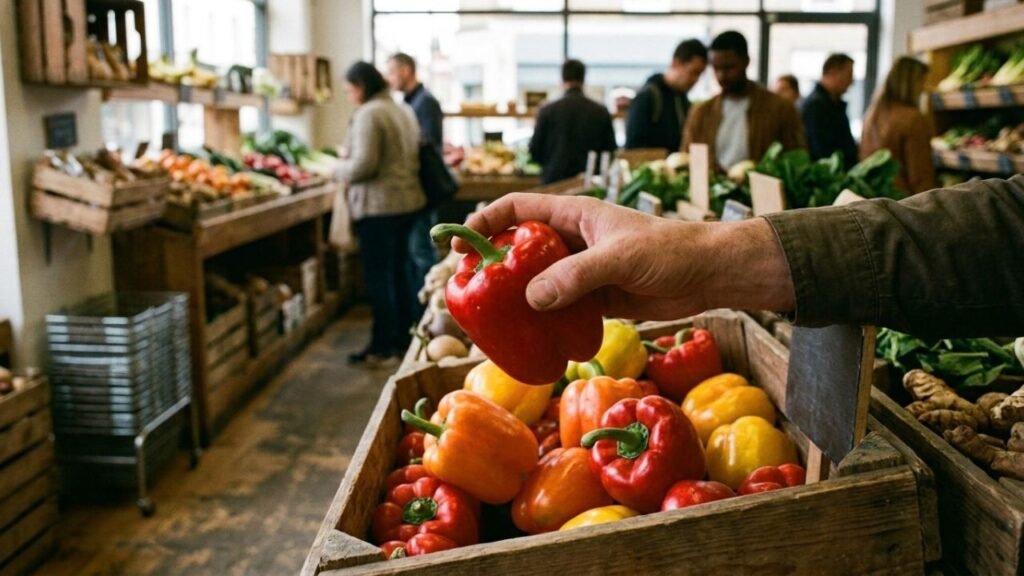
Fresh peppers should feel firm and solid in your hand, with smooth, intact skin and a healthy-looking stem. Avoid peppers that feel soft, shriveled, bruised, or damaged. The FDA’s guidance on selecting and serving fresh produce also recommends avoiding produce with bruising or damage.
Color can help indicate ripeness, but it is not always a sign of freshness. A brightly colored pepper can still be old, so check its firmness and overall condition before buying.
A Simple Way to Remember the Nine
You don’t need to memorize every name. Group them by shape.
- Large and thick — Bell, pimento
- Long and narrow — Banana, Cubanelle, Italian frying peppers
- Small and slender — Shishito, Padrón
- Small and compact — Mini sweet peppers, ají dulce
That simple visual system makes the varieties easier to recognize.
The Small Differences Are the Point
Sweet peppers seem interchangeable until you notice their proportions, maturity, thickness, color, and heat. Then the category becomes much more varied.
The bell pepper may be the familiar starting point, but it is not the whole story. Knowing a few varieties gives you a better vocabulary for understanding what you’re actually buying.
FAQs
1. Are all sweet peppers free of heat?
No. Some sweet or mild varieties can occasionally contain noticeable heat.
2. Is a red bell pepper sweeter than a green one?
Often, yes. Many red bell peppers have matured further and developed a sweeter flavor.
3. Are banana peppers always sweet?
No. The name can describe both sweet and hotter varieties.
4. Are shishito peppers sweet?
They are generally mild with a grassy, slightly sweet character, although some can be hotter.
5. What is the difference between sweet and mild peppers?
Sweet describes flavor, while mild refers more directly to heat. The two can overlap without meaning exactly the same thing.
6. Why do some sweet peppers turn red?
Many varieties change color as they mature. Depending on the variety, green fruit can develop into red, orange, yellow, or another mature color.
Close Up
Knowing sweet peppers is less about memorizing names and more about noticing the small details that separate one variety from another. Shape, color, size, texture, wall thickness, and maturity can reveal more than a simple label. A long, thin pepper has a very different character from a thick bell, while a mature red pepper may offer something quite different from its younger green form.
Once these differences become familiar, the produce section starts to look less predictable. Instead of seeing a row of similar peppers, you begin to recognize the character of each one and understand why choosing between them can actually matter.