New Orleans BBQ shrimp is one of those dishes whose name can be a little misleading. Known locally as barbecue shrimp, this Louisiana favorite has little to do with a grill or traditional barbecue sauce. This BBQ shrimp recipe takes inspiration from the New Orleans restaurant tradition, particularly the version popularized by Pascal’s Manale in the 1950s. It features a generous butter sauce infused with Worcestershire sauce, garlic, black pepper, and a sharp touch of lemon. Rooted in Louisiana’s rich Creole cooking traditions, the dish brings together generations of cultural influence in a simple yet memorable meal. The shrimp arrive coated in a rich, savory sauce that is every bit as memorable as the seafood itself.
Getting the shrimp tender while keeping the buttery pepper sauce rich rather than greasy can be tricky. This recipe shows you how to get both right without overcooking the shrimp.
Recipe at a Glance
| Details | Time or amount |
| Prep time | 10 minutes |
| Cook time | 10–15 minutes |
| Total time | 20–25 minutes |
| Servings | 2–3 people |
| Cooking method | Stovetop |
| Difficulty | Easy |
These times are estimates for an organized cooking session, with the shrimp ready to cook and the ingredients measured beforehand. Your actual time may vary depending on the shrimp’s size, your stove, and how quickly you work.
Ingredients That Build the Sauce
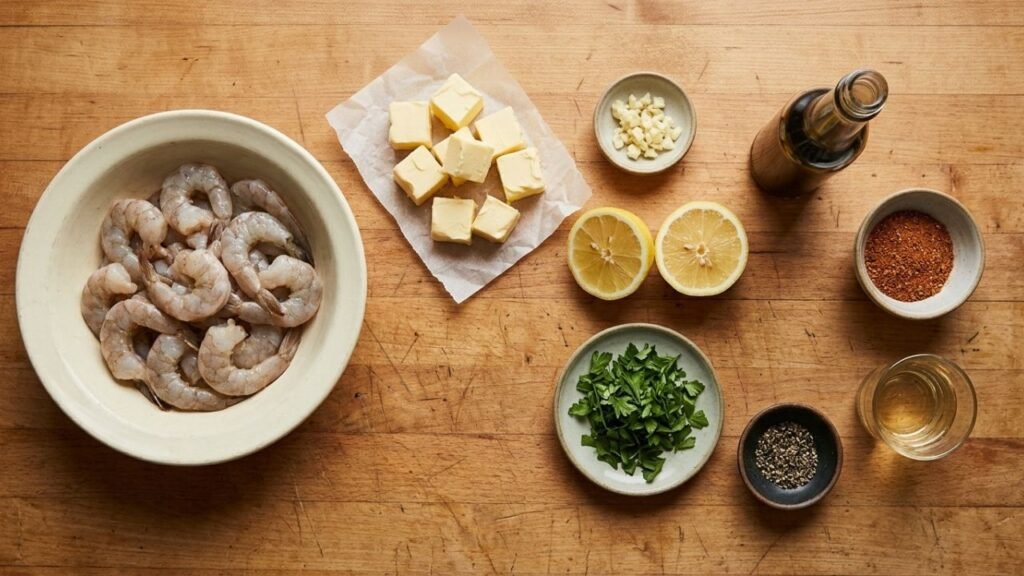
- 1 lb (450 g) large raw shrimp, peeled and deveined
- 8 tbsp (113 g) unsalted butter, cut into small cubes
- 4 garlic cloves, finely minced
- 3 tbsp Worcestershire sauce
- ¼ cup (60 ml) dry white wine or seafood stock
- 1 tbsp fresh lemon juice
- 1 tbsp Louisiana-style hot sauce
- 1–1½ tsp freshly cracked black pepper
- 1 tsp Creole seasoning
- 1 tbsp olive oil
- 1 tbsp chopped fresh parsley
- Crusty French bread, for serving
Simple Substitutions for Ingredients You May Not Have
| Ingredient | Practical replacement |
| Dry white wine | Seafood stock or chicken stock |
| Creole seasoning | A small amount of paprika, garlic powder, onion powder, and cayenne |
| Louisiana-style hot sauce | Another vinegar-based hot sauce, adjusted to taste |
| Fresh parsley | Chopped green onion or a little fresh parsley omitted altogether |
| Fresh lemon juice | Bottled lemon juice, although fresh usually tastes brighter |
Worcestershire sauce is worth keeping if possible because it contributes much of the dish’s savory, tangy character. Replacing it entirely with soy sauce, for example, will produce a noticeably different flavor.
Directions
The aim is to cook the shrimp without making them rubbery, then bring the pan juices and butter together into a glossy sauce. Keep the heat under control once the butter goes in.
1. Season the Shrimp
Pat the shrimp dry with paper towels. Toss them with the Creole seasoning and about half the black pepper. Drying the surface helps prevent excess water from diluting the sauce.
2. Start With Garlic
Heat the olive oil in a large skillet over medium-high heat. Add the minced garlic and stir for about 30 seconds, just until fragrant. Avoid browning it heavily, as burnt garlic can make the entire sauce bitter.
3. Give the Shrimp a Head Start
Add the shrimp in a single layer and cook for approximately one minute per side. They should begin turning pink but do not need to be fully cooked yet. If your skillet is small, work in batches rather than crowding the pan.
4. Bring in the Pepper and Worcestershire
Pour in the Worcestershire sauce, wine or stock, lemon juice, hot sauce, and remaining black pepper. Stir well, scraping the flavorful bits from the bottom of the skillet. Let the liquid simmer for two to three minutes so it reduces slightly.
5. Turn the Liquid Into Butter Sauce
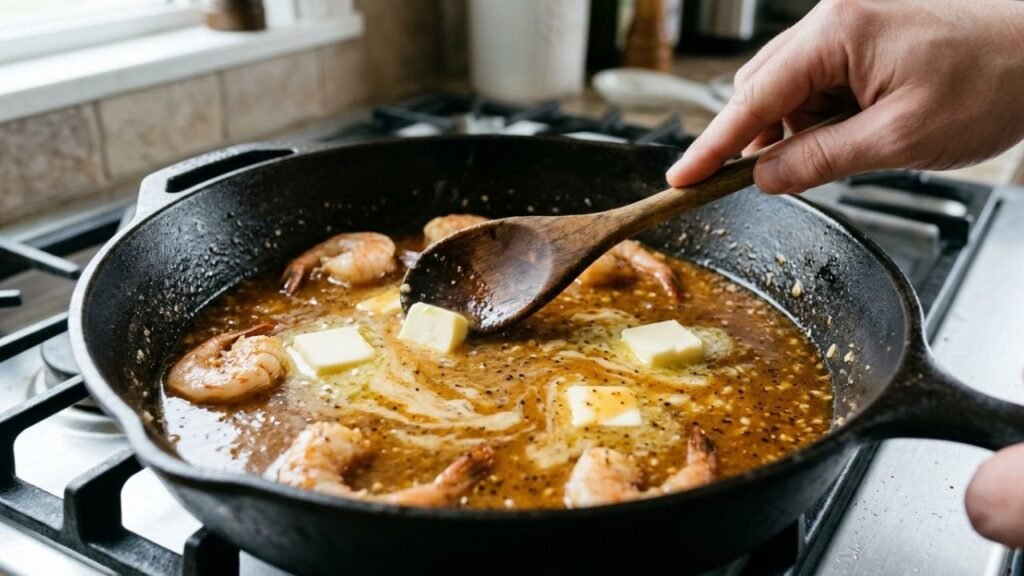
Reduce the heat to medium-low. Add the cold butter a few cubes at a time, stirring gently as each addition melts. This gradual process helps the butter combine with the cooking liquid instead of separating into a greasy layer.
6. Finish Without Overcooking
Continue cooking until the shrimp are opaque and just firm, usually another one to three minutes depending on their size. Stir in the parsley and taste the sauce before adding any salt. Serve while hot.
What Belongs Beside the Bowl
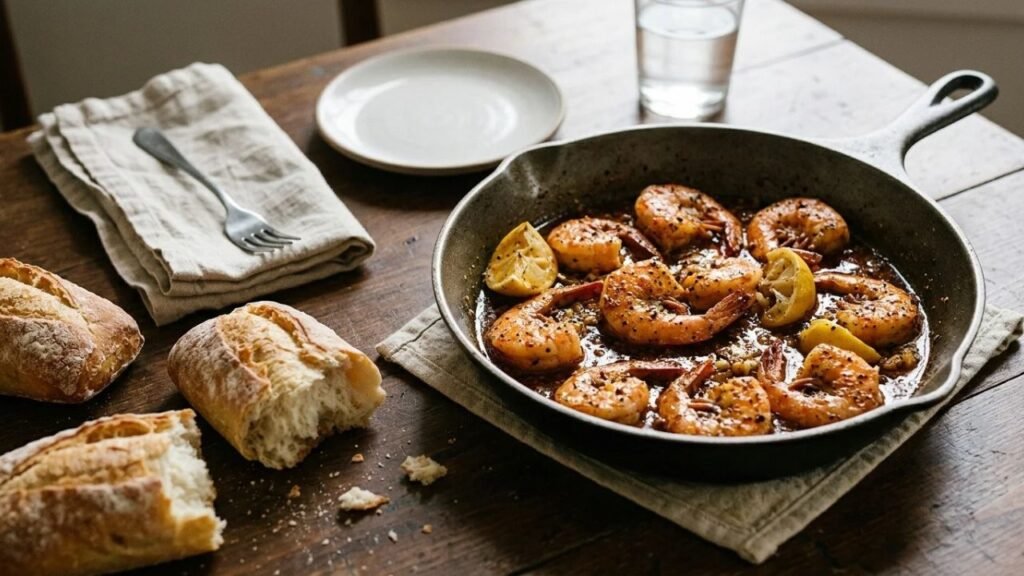
Crusty French bread is the classic choice for New Orleans BBQ shrimp, and for good reason. Its crisp crust and soft center make it ideal for soaking up the buttery pepper sauce without falling apart. Serve it warm alongside the shrimp so every last bit of sauce can be enjoyed.
For a more filling meal, serve the shrimp over steamed rice, which absorbs the sauce beautifully, or pair them with roasted potatoes for a heartier plate. A simple green salad dressed with lemon vinaigrette also works well, adding freshness that balances the richness of the butter.
Keeping Leftovers Worth Eating
If you have leftovers, transfer the shrimp and sauce to a covered container and refrigerate promptly. As a general guideline, use them within two days for the best quality, provided they have been handled and refrigerated safely. Your actual storage time depends on how fresh the shrimp were to begin with and how consistently cold your refrigerator stays. For additional advice on seafood storage, thawing, and safe handling, consult the FDA’s guidance on handling fresh and frozen seafood safely.
To reheat, warm them gently in a skillet over low heat with a small splash of water or stock. Stir carefully until heated through. Avoid a vigorous boil or prolonged cooking, which can toughen the shrimp and cause the butter sauce to separate. Freezing is possible, but the shrimp’s texture and the sauce may suffer after thawing.
Small Mistakes That Change the Whole Dish
- Using high heat throughout: Butter can separate when the sauce boils too aggressively. Lower the heat before adding it.
- Adding all the butter at once: Gradual additions make it easier to create a cohesive sauce.
- Cooking the shrimp for too long: Shrimp continues cooking in the hot sauce, so remove the pan from the heat as soon as they are done.
- Adding salt without tasting: Worcestershire and Creole seasoning can already provide plenty of saltiness.
- Using only fine-ground pepper: Coarsely cracked black pepper gives the sauce a more noticeable bite and texture.
- Skipping the bread: It is not essential, but leaving the sauce behind is missing half the pleasure of the dish.
Questions That Come Up Before Serving
1. Is New Orleans BBQ shrimp actually barbecued?
No. The familiar New Orleans version is generally cooked in a skillet with butter, Worcestershire sauce, pepper, and other seasonings rather than over a barbecue grill.
2. Should the shrimp be peeled or left in their shells?
Peeled shrimp are easier to eat and convenient for a quick meal. Shell-on shrimp can contribute extra flavor, but they make the dish messier and require more attention at the table.
3. Can frozen shrimp be used?
Yes. Thaw them safely in the refrigerator or under cold running water, then drain and pat them thoroughly dry before cooking.
4. How can the sauce be made less spicy?
Reduce the hot sauce and start with less black pepper. You can add more pepper toward the end, but it is difficult to remove once the sauce has become too intense.
5. Why does the butter sauce sometimes look oily?
The butter may have been added over excessive heat, or the sauce may have boiled too vigorously. Lower the temperature and stir in a small splash of warm stock while gently mixing.
6. Can the recipe be made without wine?
Yes. Seafood stock is a particularly suitable replacement, whole chicken stock also works. Lemon juice supplies some of the acidity that helps balance the butter.
A New Orleans Classic Best Served Straight Away
New Orleans BBQ shrimp gets its character from a handful of ingredients that work well together, butter, garlic, Worcestershire sauce, and plenty of cracked black pepper. The secret is not complicated cooking but getting the small details right. Keep the heat gentle when adding the butter, watch the shrimp closely, and let the sauce develop without overpowering the natural sweetness of the seafood.
Serve the shrimp straight from the pan with warm French bread, steamed rice, or your preferred side. The buttery pepper sauce is a big part of what makes this dish memorable, so give it the attention it deserves. With a little care and the right balance of flavors, you can bring a taste of New Orleans into your own kitchen.