Homemade campanelle pasta with fresh puttanesca sauce brings together two Italian favourites, flower-shaped pasta with ruffled edges and a bold tomato sauce associated with Naples. Campanelle takes its name from the Italian word for little bells, while puttanesca is recognised for its combination of tomatoes, olives, capers and garlic. These flavours belong to a wider regional tradition, reflected in Campania’s distinctive food culture, where local ingredients and culinary customs vary across the region.
Getting homemade campanelle to hold its shape while soaking up puttanesca sauce can be tricky. Here, you’ll learn how to achieve tender pasta and a well-balanced sauce.
Preparation and Cooking Time
These timings are estimates for planning your meal. Actual time depends on your pasta-shaping experience, dough thickness and how quickly the sauce reduces.
| Stage | Estimated time |
| Preparation | 25 minutes |
| Dough resting | 30 minutes |
| Sauce preparation and cooking | 15–20 minutes |
| Shaping and boiling pasta | 15–20 minutes |
| Final tossing and serving | 2–3 minutes |
| Total time | Approximately 1 hour 30 minutes |
Ingredients for Handmade Campanelle and Puttanesca
For the fresh pasta
- 200 g tipo 00 flour, plus extra for dusting
- 2 large eggs
For the puttanesca sauce
- 300–350 g ripe tomatoes, finely chopped
- 3 tablespoons extra-virgin olive oil
- 2 garlic cloves, thinly sliced
- 40 g pitted black olives, roughly chopped
- 1 tablespoon capers, rinsed
- 2–3 anchovy fillets, optional
- ¼ teaspoon chilli flakes, or to taste
- 2 tablespoons chopped fresh parsley
- Salt and freshly ground black pepper, as needed
- Reserved pasta water
Ingredient Swaps That Still Work
| ingredient | Possible replacement | What changes |
| Tipo 00 flour | All-purpose flour | The dough texture may differ slightly. |
| Fresh tomatoes | Canned chopped tomatoes | The sauce may taste more concentrated. |
| Black olives | Green olives | The flavour becomes sharper. |
| Anchovies | Omit them | The sauce loses some savoury depth. |
| Fresh parsley | Fresh basil | The finish becomes sweeter and more aromatic. |
| Capers | Finely chopped green olives | The distinctive tang becomes less pronounced. |
Directions
Prepare the dough first and let it rest while you organise the sauce ingredients. Cook the pasta shortly before serving to preserve its tender texture.
1. Bring the Pasta Dough Together
Place the flour on a clean work surface and make a well in the centre. Add the eggs and gradually incorporate the flour until a rough dough forms.
Knead for 8–10 minutes until smooth and elastic. Add a few drops of water if too dry, or a little flour if sticky. Cover and rest for 30 minutes.
2. Shape the Campanelle
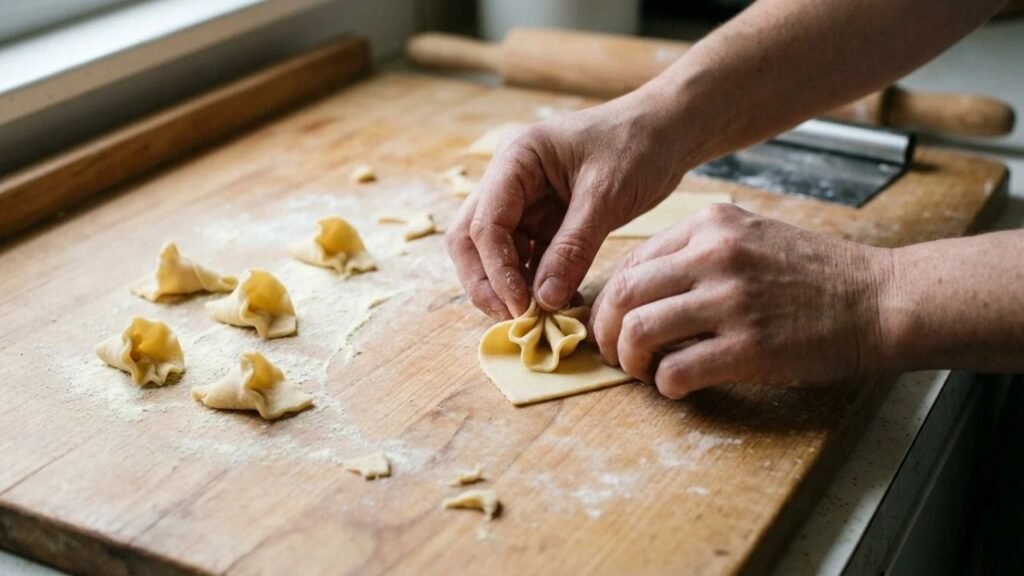
Roll the dough into a thin sheet and cut it into squares roughly 3–4 cm wide.
Pinch or gather each square into a ruffled, flower-like shape, using a clean wooden dowel to form the centre if needed. Keep the folds open and place the pieces on a lightly floured tray.
3. Start the Puttanesca Sauce
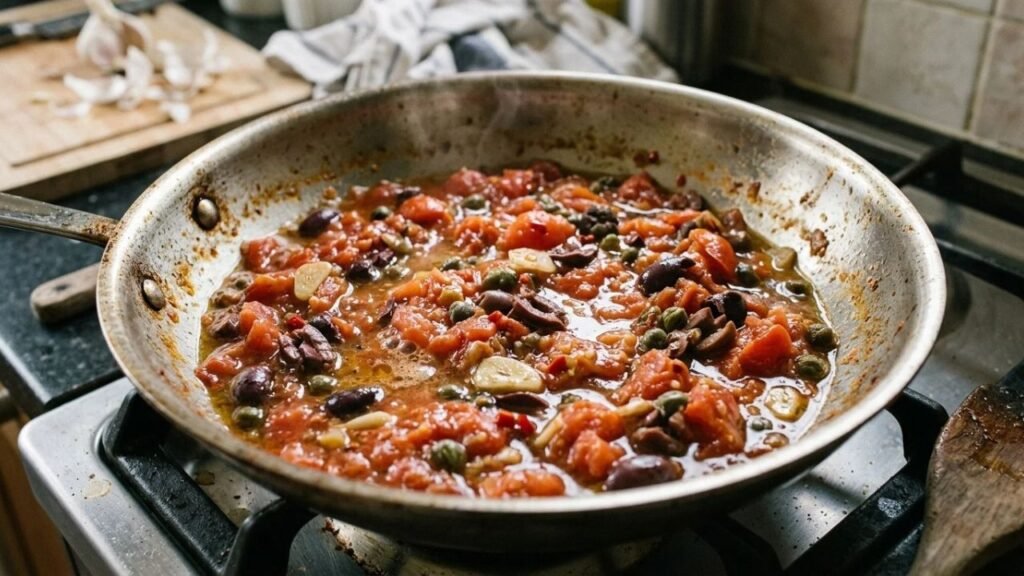
Warm the olive oil in a wide pan over medium-low heat. Add the garlic and chilli, stirring until fragrant without browning the garlic.
If using anchovies, stir them in until they dissolve into the oil. Add the capers and olives, followed by the chopped tomatoes. Simmer for 10–15 minutes, stirring occasionally, until the tomatoes soften and the sauce thickens slightly.
4. Cook the Fresh Pasta
Bring a large pot of salted water to a boil. Add the campanelle and begin checking after 2–3 minutes.
Thicker pieces may need longer. Taste before draining, the pasta should be tender but retain a little resistance. Reserve a mug of pasta water.
5. Bring Everything Together
Transfer the drained campanelle into the sauce. Add a splash of pasta water and toss gently over low heat for 1–2 minutes.
Add more water if the sauce looks dry, then finish with parsley and black pepper. Taste before adding salt, especially if you’ve used anchovies.
Serving the Pasta Without Hiding Its Flavour
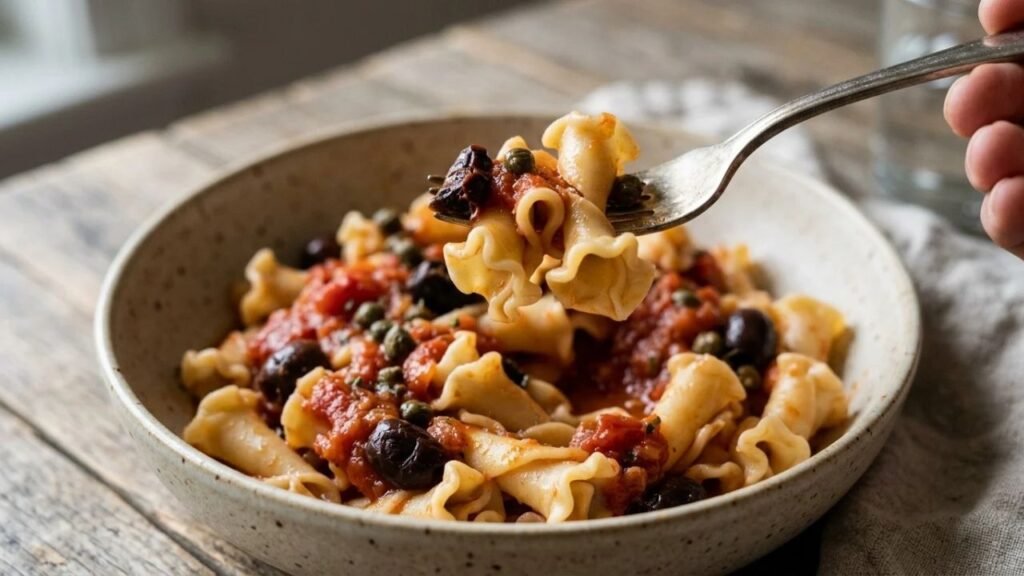
Serve the campanelle immediately in warm bowls, making sure each portion includes plenty of sauce, olives and capers caught between the folds. A light drizzle of extra-virgin olive oil adds a fresh finish.
Crusty bread makes a useful accompaniment for collecting the remaining tomato sauce. A simple green salad can provide a crisp contrast to the richness of the olive oil.
Parmesan is optional rather than essential. Puttanesca already has a pronounced savoury character, so a generous amount of cheese may overwhelm its sharper flavours.
Keeping Leftovers Fresh
If you have leftover pasta, transfer it to a suitable container and refrigerate it promptly. For more detailed advice on cooling, storing and reheating prepared food, consult the USDA’s guidance on leftover food safety. How long your pasta keeps depends on how quickly it cools, how it is handled and the temperature of your refrigerator.
For reheating, place the pasta in a pan over low heat with a small splash of water. Stir gently until heated through. The sauce may have thickened overnight, and the extra liquid helps loosen it.
Fresh campanelle is at its best just after cooking. Refrigeration and reheating can soften its folds, so make only as much as you expect to eat when texture is your main priority.
Small Mistakes That Can Change the Result
- Making the dough too wet: Add flour gradually until the dough becomes manageable.
- Rolling unevenly: Keep the dough thickness consistent so the pieces cook at a similar rate.
- Closing the folds too tightly: Loose folds cook more evenly and hold the sauce better.
- Browning the garlic: Moderate heat prevents bitterness.
- Over-reducing the sauce: Add pasta water to restore a glossy, coating consistency.
- Adding salt too early: Taste first because olives, capers and anchovies already contribute salt.
FAQs
1. Can dried campanelle replace homemade pasta?
Yes. Follow the packet instructions and finish the drained pasta in the sauce.
2. Can I prepare the pasta dough ahead?
Yes. Cover it airtight and refrigerate for a short period. Let it soften slightly before rolling if it feels too firm.
3. Is puttanesca traditionally made with anchovies?
Many versions include anchovies, but recipes vary. You can omit them if you avoid fish.
4. How can I tell when the sauce is ready?
The tomatoes should be soft and the sauce slightly reduced, but still moist enough to coat the pasta.
5. Why does fresh pasta stick together?
Damp pieces can stick when crowded or piled together. Dust them lightly with flour and spread them across a tray.
A Simple Dish Worth Making by Hand
Homemade campanelle with fresh puttanesca sauce brings together handmade pasta and the bold flavours of Italian cooking. Its ruffled edges catch the tomato sauce, while olives and capers add a salty bite that balances the tomatoes’ natural acidity. Each element has its own role, creating a dish that feels satisfying without relying on complicated ingredients or elaborate presentation.
The result does not need elaborate finishing or a long list of additions. Pay attention to the dough, taste the sauce as it cooks and bring the two together while everything is still warm. That is where this dish finds its character, in the small decisions that make a familiar Italian combination feel personal and freshly made.