Dried lentils have been part of everyday cooking for centuries, appearing in different forms across South Asian, Mediterranean, Middle Eastern, and European food traditions. Known by names such as masoor dal, moong dal, and French green lentils, these small pulses vary in color, size, and texture. Some are sold whole with their outer skin intact, while others are split or skinned, giving each type its own place in the kitchen. Beyond their culinary uses, pulses also contribute to food security and more sustainable food systems, as discussed by the Food and Agriculture Organization of the United Nations in its overview of their broader role.
Choosing the right lentils can be confusing when different varieties look similar but serve different purposes. This article explains their differences and helps you choose the right type for your dish.
1. Brown Lentils for Everyday Comfort Food
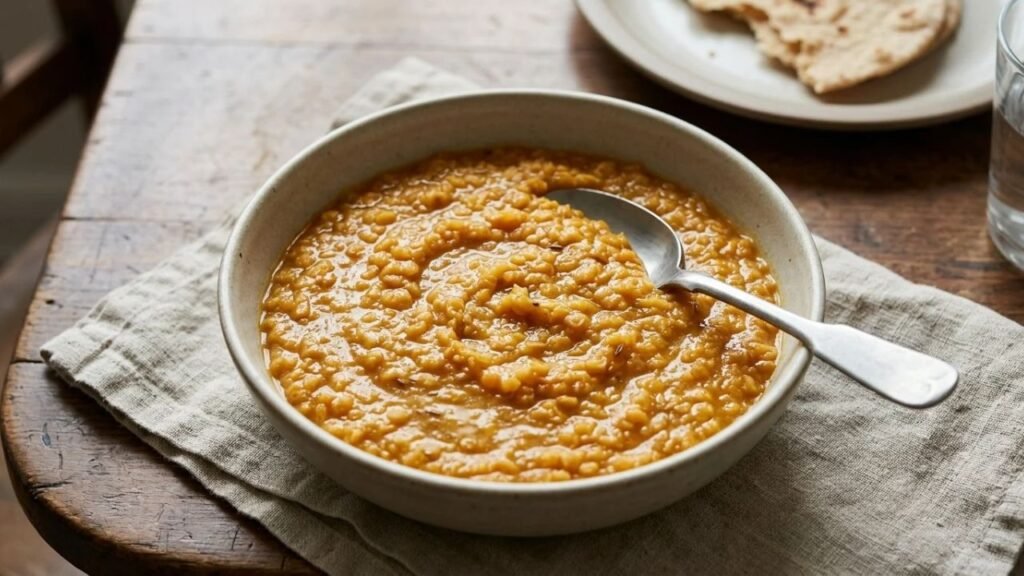
Brown lentils are a dependable pantry staple, with a mild, earthy flavor and a texture that becomes tender without immediately falling apart. Their versatility makes them suitable for dishes where lentils need to provide both substance and body.
Best uses: Thick soups, vegetable stews, lentil fillings, and everyday curries.
What makes them useful: Brown lentils sit comfortably between firm and creamy. They can retain some shape in a stew while releasing enough starch to give the surrounding liquid a fuller consistency.
A useful distinction: Choose brown lentils when a recipe needs a little of both textures rather than a completely smooth finish.
2. Green Lentils That Keep Their Shape
Green lentils are generally firmer than brown lentils and have a slightly peppery, earthy taste. Their ability to retain their shape makes them particularly useful in dishes where individual lentils should remain visible rather than blend into the surrounding ingredients.
Best uses: Lentil salads, grain bowls, vegetable sides, and hearty pilafs.
What makes them useful: They provide structure without requiring another ingredient to create texture. This is especially helpful in salads, where soft lentils can turn the entire dish heavy.
A useful distinction: Look for whole green lentils when texture matters. Split varieties behave differently, even when their color appears similar.
3. French Green Lentils for a Firmer Finish
French green lentils, particularly those associated with Le Puy, are small, dark green, and known for their firm texture. Their earthy, peppery flavor makes them a good match for simple dishes in which the lentils remain the main attraction.
Best uses: Warm salads, vegetable accompaniments, and composed side dishes.
What makes them useful: They tend to retain their shape better than many ordinary brown or green lentils, making it easier to create a dish with clearly defined ingredients.
A useful distinction: Genuine Lentilles Vertes du Puy come from a specific region in France. Other lentils sold as French-style green lentils may look similar but are not necessarily the same product.
4. Red Lentils for a Naturally Creamy Texture
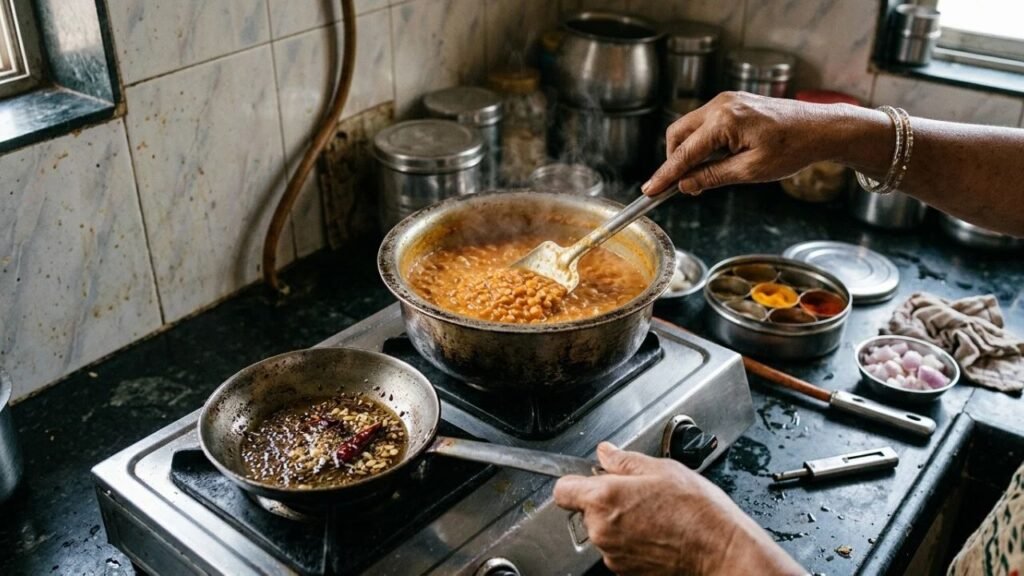
Red lentils, commonly known as red masoor dal when sold as split lentils, are usually skinned and divided into halves. This makes them cook relatively quickly and soften considerably, producing the thick consistency associated with many traditional dals and lentil soups.
Best uses: Masoor dal, creamy soups, purees, and soft-textured curries.
What makes them useful: They break down easily, creating body without requiring cream or flour. Their relatively mild flavor also allows spices and aromatics to stand out.
A useful distinction: Red lentils are not the best choice when a dish depends on firm, separate lentils. Their softness is an advantage in one dish and a limitation in another.
5. Black Beluga Lentils for Defined, Glossy Texture
Black beluga lentils are small, dark, and almost glossy when cooked. Their appearance gives them a distinctive place among lentil varieties, while their relatively firm texture helps them remain separate on the plate.
Best uses: Warm salads, vegetable bowls, side dishes, and lentil-based main courses.
What makes them useful: Their dark color creates contrast with ingredients such as roasted squash, cauliflower, fresh herbs, and lighter-colored grains.
A useful distinction: Choose beluga lentils when both appearance and structure matter. They are particularly effective in dishes where the lentils should be seen as individual components.
6. Yellow Lentils and the Names Behind Them
Yellow lentils can be confusing because the term is not always used consistently. In South Asian markets, yellow split pulses may be identified by their specific names, including moong dal and toor dal. These are different pulses, not simply interchangeable versions of one yellow lentil.
Yellow split varieties generally work well in dishes where a softer texture is welcome, although cooking time and consistency depend on the particular pulse.
Best uses: Soft-textured dals, soups, and everyday dishes served with rice or flatbread.
What makes them useful: Their mild flavor works well with a wide range of seasonings, while split and skinned varieties tend to soften more quickly than whole pulses.
A useful distinction: Check the name on the packet rather than choosing by color alone. Moong dal and toor dal have different characteristics, so identifying the pulse helps you choose more accurately.
Choosing the Right Lentil for the Dish
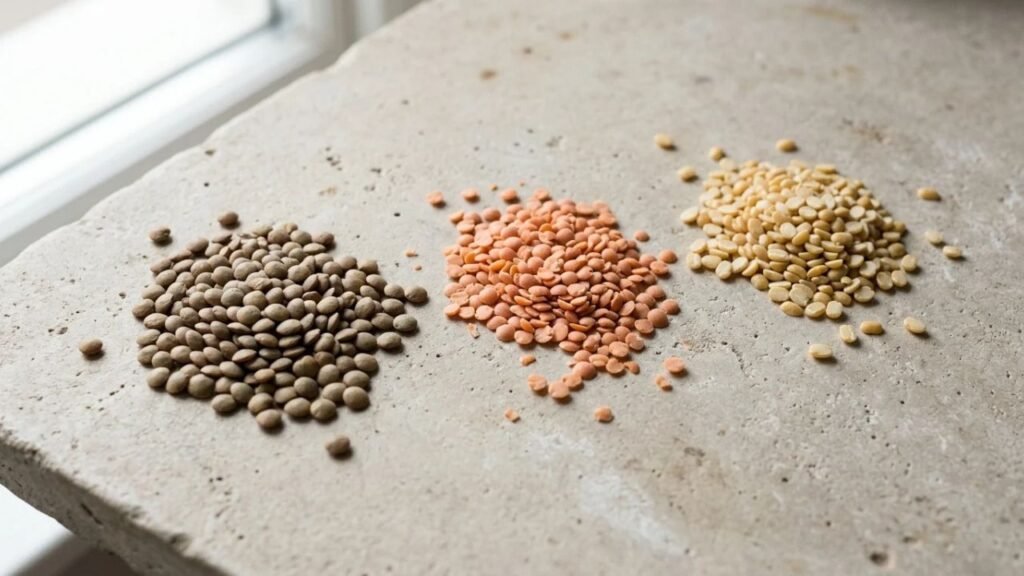
The easiest way to select a lentil is to think about the texture you want rather than the color you prefer.
| Type | Best use | Expected texture |
| Brown lentils | Soups and stews | Tender, slightly substantial |
| Green lentils | Salads and grain bowls | Firm and separate |
| French green lentils | Structured side dishes | Particularly firm |
| Red split lentils | Dal and creamy soups | Soft and thick |
| Black beluga lentils | Salads and vegetable bowls | Small and distinct |
| Yellow split pulses | Soft-textured dals | Tender to creamy |
A few practical distinctions worth remembering
- Whole versus split: Whole lentils generally retain more structure, while split and skinned varieties tend to soften faster.
- Color versus identity: Similar colors do not guarantee identical cooking behavior. The variety and how it has been processed matter.
- Texture versus cooking time: Older dried lentils may take longer to soften, so the time printed on a packet is a guide rather than a guarantee. For additional guidance on keeping dried legumes in good condition, see Utah State University Extension’s recommendations for storing dried legumes, which discuss storage conditions and changes that can affect cooking performance.
- Firmness versus softness: A lentil that becomes mushy in a salad may be exactly right for a smooth dal.
Common Lentil Confusion Cleared Up
1. Are red lentils and masoor dal the same?
Red split lentils are commonly sold as masoor dal. However, labels and forms can vary, so check whether the product is split, skinned, or whole.
2. Do green lentils hold their shape better than red lentils?
Generally, yes. Whole green lentils are firmer, while red split lentils soften quickly and are better suited to creamy dishes.
3. Are brown and green lentils interchangeable?
Sometimes. Both work in soups and stews, but green lentils generally retain a firmer bite, while brown lentils tend to produce a softer finish.
4. Are yellow lentils the same as moong dal?
Not necessarily. Yellow lentils is a broad label, while moong dal identifies a particular pulse, usually sold split and skinned in its familiar yellow form.
5. Do dried lentils need soaking?
Most common dried lentils do not require soaking before cooking. Rinsing and checking them for small stones or debris is still useful.
6. Which lentils work best in salads?
Whole green, French green, and black beluga lentils are strong choices because they tend to remain separate after cooking.
7. Why do some lentils take longer to soften?
The variety, age, storage conditions, and whether the lentils are whole or split can all affect how quickly they soften.
The Right Lentil Makes the Difference
Different types of dried lentils have their own textures and uses, which makes choosing the right variety important. Brown lentils work well in everyday dishes, green and black lentils retain their shape, while red split lentils soften quickly and give dal and soups a thicker consistency.
Knowing these differences makes it easier to choose lentils that suit your cooking needs. Instead of relying on color alone, look at the variety and whether the lentils are whole or split to find the best match for your dish.