Torta gazpachera is a traditional Spanish flatbread associated with Castilla-La Mancha, where it forms part of the hearty regional dish known as gazpachos manchegos. Also called torta de gazpachos in some contexts, it reflects a rural cooking tradition in which bread serves a practical purpose beyond the table. Instead of being eaten only alongside a meal, it is broken into pieces and added to a savoury stew, absorbing the flavours of the broth. Its place in regional cooking shows how a simple staple can become an essential part of a dish rather than merely something served beside it.
Making torta gazpachera at home can be difficult when the dough turns too hard or unevenly cooked. This recipe explains how to get the texture right without unnecessary guesswork.
Torta Gazpachera Recipe at a Glance
| Stages | Detail |
| Preparation | 15 minutes |
| Cooking | 8-12 minutes |
| Resting | 15 minutes |
| Total time | 38-42 minutes |
| Yield | 2 flatbreads |
These are estimated times. Your actual preparation and cooking time may vary depending on your pace, dough consistency and oven. Allow a little extra time if this is your first attempt, particularly when rolling the dough evenly.
The Ingredients Behind This Flatbread
- 250 g plain wheat flour: Provides the structure for the flatbread.
- 125–145 ml water: Bring the flour together into a workable dough.
- ½ teaspoon salt: Adds a little flavour without overpowering the accompanying stew.
Simple Ingredient Substitutions
| Ingredient | Possible replacement | What to know |
| Plain wheat flour | Bread flour | May produce a firmer dough; adjust water gradually. |
| Water | No replacement needed | Keeps the recipe simple and traditional in style. |
| Fine salt | Sea salt | Adjust the quantity slightly if using coarse grains. |
The basic version needs no yeast, milk or butter. Keeping the ingredient list short also makes it easier to judge the dough by touch rather than relying on additional ingredients to change its texture.
Directions for Making Torta Gazpachera
The goal is a thin, evenly baked flatbread that feels firm and dry rather than soft and fluffy. Treat the timings as a guide, since flour and ovens vary.
1. Bring the Dough Together
Mix the flour and salt in a bowl. Gradually add the water, stirring until a rough dough forms. Start with 125 ml and add more only if the mixture feels too dry to come together.
The dough should not look wet or leave a sticky coating on your fingers. If it feels slightly firm at first, kneading will help bring it together.
2. Knead Until Smooth
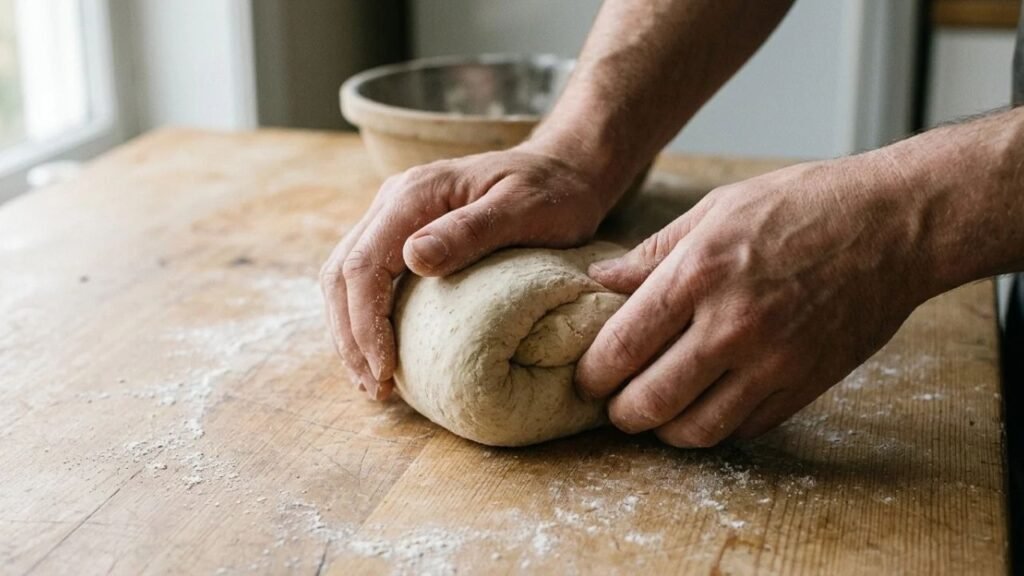
Knead on a clean surface for 5–8 minutes, until the dough feels firm but pliable. It should hold together without sticking excessively to your hands.
Avoid adding extra flour simply because the dough feels firmer than a bread dough. Too much additional flour can make the finished flatbread dry and difficult to handle.
3. Let the Dough Rest
Cover and leave the dough for 15 minutes. This relaxes the gluten and makes rolling easier. If the dough keeps shrinking back, give it another five minutes to rest.
Keep the dough covered during this stage so the surface does not dry out. Small cracks around the edges can make the next step more difficult.
4. Roll Into Thin Rounds
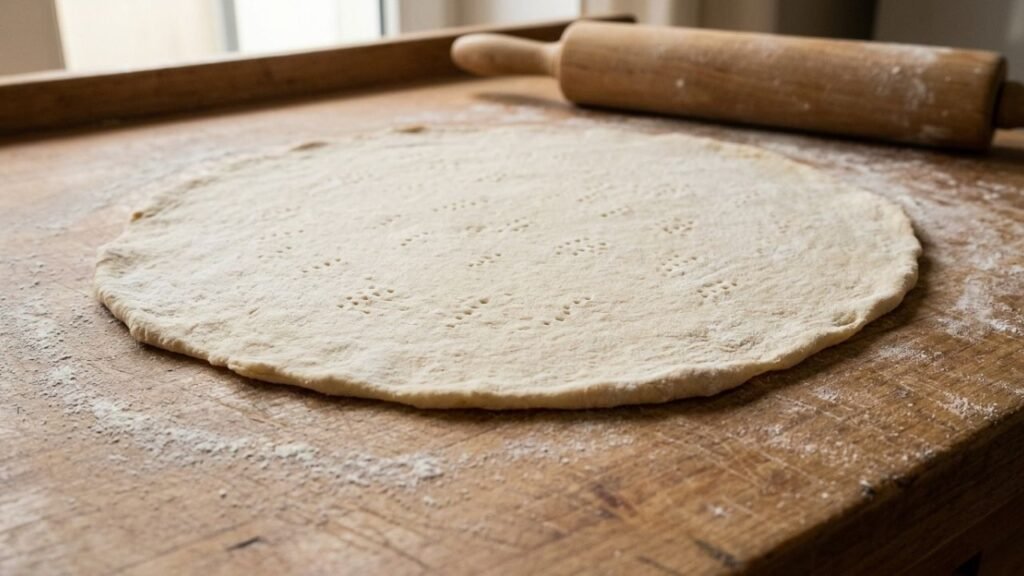
Divide the dough into two equal portions. Roll each on a lightly floured surface to approximately 2–3 mm thick. Keep the thickness even and prick the surface with a fork to help prevent large air pockets.
Rotate the dough as you roll rather than repeatedly pulling it in one direction. This helps maintain an even shape and reduces the chance of creating thin patches that bake too quickly.
5. Bake Until Dry
Preheat the oven to 220°C (425°F). Place the flatbreads on a baking tray and bake for 8–12 minutes, checking regularly. The surface should be dry with light colouring, not deeply browned.
If one side colours faster than the other, rotate the tray or turn the flatbread when practical. The exact baking time will depend on your oven, tray and dough thickness, so use the appearance and feel of the bread alongside the clock.
6. Cool Before Breaking
Transfer the flatbreads to a wire rack and cool completely. They should feel firm enough to break into pieces while remaining suitable for absorbing broth.
Allowing steam to escape prevents trapped moisture from softening the bread during storage. Once cool, the flatbread is ready to use in a stew or keep for another meal.
Serving Torta Gazpachera the Traditional Way
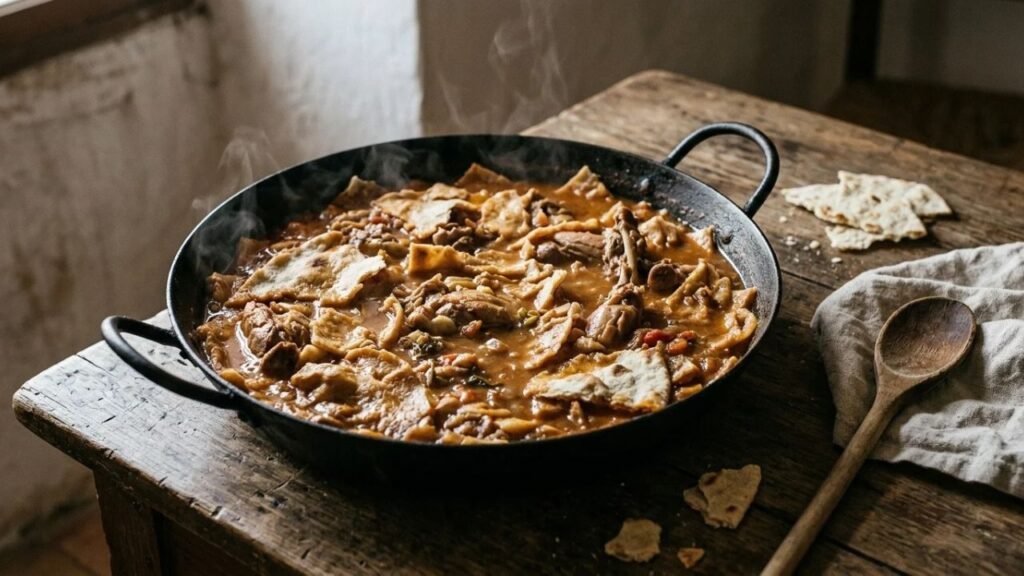
Torta gazpachera is particularly associated with gazpachos manchegos, a hot Spanish stew made with meat, vegetables and aromatic seasonings. Rabbit and chicken are common choices, although recipes vary between households.
Break the flatbread into pieces and add them towards the end of cooking. Stir gently as they absorb the broth and soften. Add the pieces gradually to control the consistency and avoid making the stew too thick.
The bread changes the character of the dish as it absorbs the cooking liquid, helping create a more cohesive texture. For this reason, the amount added matters just as much as the timing. Start with a small portion, allow it to soften, and then decide whether the stew needs more.
Keeping the Flatbread Fresh
Once completely cool, store torta gazpachera in an airtight container in a cool, dry place. Using homemade flatbread within a few days is a reasonable guideline, although freshness depends on humidity, how thoroughly it was baked and storage conditions.
Discard the flatbread if you notice mold, an unusual smell or unwanted moisture. For additional guidance on recognising mould in food and knowing when to discard it, consult the USDA’s advice on mould in food. Reheating is generally unnecessary, but a brief spell in a low oven can warm the bread. Watch carefully, as additional heating may make it harder.
If you intend to use the flatbread in a stew later, keep it separate from the broth until cooking. Storing the two together will soften the bread and change its texture before you are ready to serve.
Small Mistakes That Change the Result
- Adding all the water at once: Flour absorbs water differently, so add it gradually.
- Rolling unevenly: Thick patches may remain harder than thin areas.
- Skipping the rest: The dough may resist rolling or shrink back.
- Expecting fluffy bread: This unleavened flatbread has a denser structure than yeast-raised bread.
- Overbaking: Aim for a dry surface and light colour rather than deep browning.
- Adding too much to the stew: The bread absorbs liquid, so add it gradually to maintain the desired consistency.
Common Questions About Torta Gazpachera
1. Is torta gazpachera an ordinary Spanish flatbread?
It is a regional flatbread particularly associated with gazpachos manchegos, where it absorbs the stew’s broth.
2. Does it contain yeast?
The basic traditional-style version is unleavened and uses flour, water and salt.
3. Why has my flatbread become too hard?
Excessive baking or very thin dough can make it brittle. Check early and remove it once the surface is dry and lightly coloured.
4. Can I prepare the dough ahead?
You can prepare it shortly before baking and keep it covered during the resting period. For the simplest result, avoid leaving it unattended for an extended time.
5. How thin should I roll the dough?
Approximately 2–3 mm is a useful starting point. Consistent thickness matters more than achieving a perfectly circular shape.
6. Can I cook it in a frying pan?
Yes, a heavy, dry frying pan can cook thin dough, although the texture may differ from oven-baked flatbread. Moderate, even heat helps prevent premature browning.
7. Is it the same as Andalusian gazpacho?
No. Andalusian gazpacho is a chilled vegetable soup, while gazpachos manchegos is a hot regional stew traditionally served with pieces of torta gazpachera.
A Simple Bread With a Specific Purpose
Torta gazpachera is a traditional Spanish flatbread with a practical place in the cooking of Castilla-La Mancha. Its thin shape and firm texture make it well suited to gazpachos manchegos, where pieces of bread soak up the savoury broth and become part of the meal rather than simply sitting alongside it.
Making it at home comes down to a few details, keeping the dough workable, rolling it evenly and watching the oven closely. Get these right, and you’ll have a simple homemade flatbread that stays true to the purpose behind this regional Spanish speciality.